Creating Nonskid Surfaces
Spring 2020

GET STARTED
FREE PRINT & DIGITAL EDITIONS
Spring 2020
Nonskid surfaces may need to be replaced because they are worn down from years of use, or were removed during a deck repair. If you want to match an existing pattern, flexible molds are available for matching a production boat non-skid pattern or for use if a molded appearance is desired. Molded non-skid surfaces are often very open making them easier to clean and they have a more finished appearance (See Epoxyworks 22, “Repair Non-Skid and get Professional Results”). For applications where it is not practical to use molds, or a simple and functional non-skid surface is desired, there are some easy options.
It is important to note that when applying nonskid surfaces with epoxy, you’ll need to make it pretty rough because epoxy requires a UV-protective topcoat (typically paint). The topcoat will fill in or smooth over some of the new nonskid texture. Here are three different methods for creating nonskid with epoxy that do not require the use of a mold.
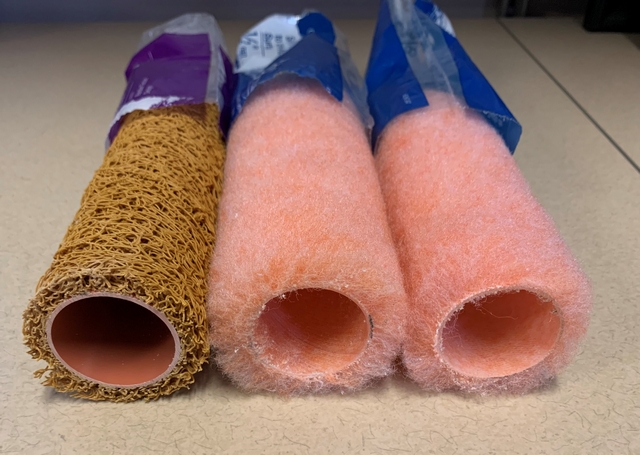
A simple method for creating nonskid surfaces is to use a textured roller cover designed for painting rough surfaces. Be aware that if you slide on this type of surface it can also remove your skin. Mix WEST SYSTEM® 105 Epoxy with the WEST SYSTEM 200 series hardener of your choice, then stir in a filler such as 406 Colloidal Silica. The epoxy should be thickened enough so when you roll it on it will stand up and stay there, not slump or smooth back down.
A conventional paint roller (not a foam roller) with a longer (3/8″ or ½”) nap will also give a good nonskid surface. You’ll need to experiment with the thickness of the thickened epoxy to get it to stand up and stay standing as it’s rolled onto the surface. Both types of rollers require some experimenting to determine the right epoxy thickness and surface texture. Do some test panels or test areas to get the look and texture you want. The tests need to be completed all the way to painting the topcoat. Keep in mind that it can be difficult to abrade a textured epoxy surface, but this is necessary so that the paint will adhere to the epoxy and protect it from UV exposure (which degrades all epoxies over time). A 3M Scotch Brite™ pad or a wire bristle brush can be helpful when trying to abrade the epoxy’s textured surface.
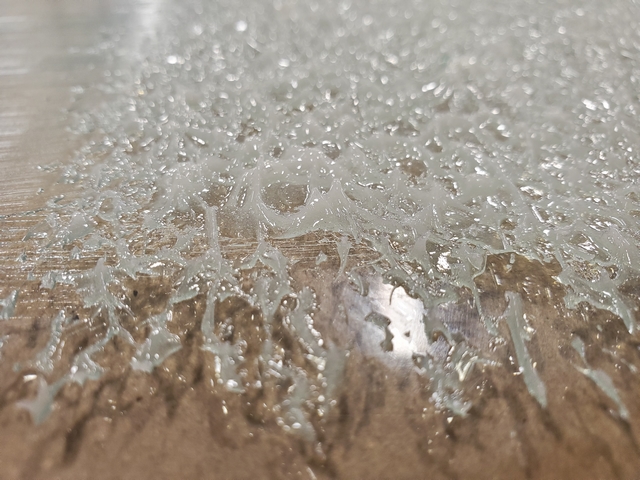
The next method is to use the epoxy to bond a nonskid additive to the existing surface. There are additives designed for paints that will work very well with epoxy. I’ve found that the coarsest additive available works the best. Here again, because adding a coat of epoxy and paint over the grit media smooths out the roughness to some extent. The coarse nonskid additive can be blended into the mixed epoxy resin and hardener, then rolled onto the surface.
An alternate method is to sprinkle the nonskid additive onto the uncured epoxy surface and allow it to tack up, but not completely cure, before applying a thin coat of epoxy on top to sandwich the nonskid material between epoxy layers. This will allow for a chemical bond between the layers of epoxy and save on sanding.
The nonskid material can be as simple as sand from a hobby store to Awlgrip® Griptex® nonskid additive from a paint store. If you’re opting for the hobby store sand and applying the nonskid surface to wood that will be bright finished, you can get it to look uniform by sifting the sand through an old flour sifter or a piece of screen to ensure the granules are close to the same size. Any unevenness in grain size will be less noticeable on a painted surface.
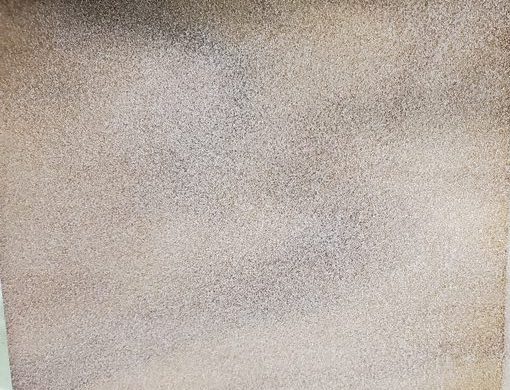
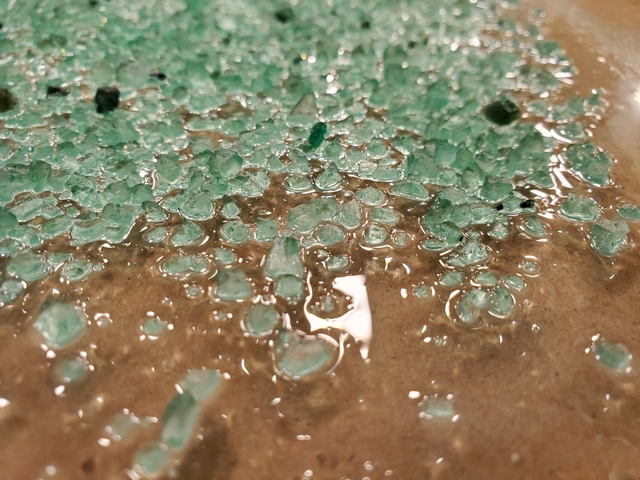
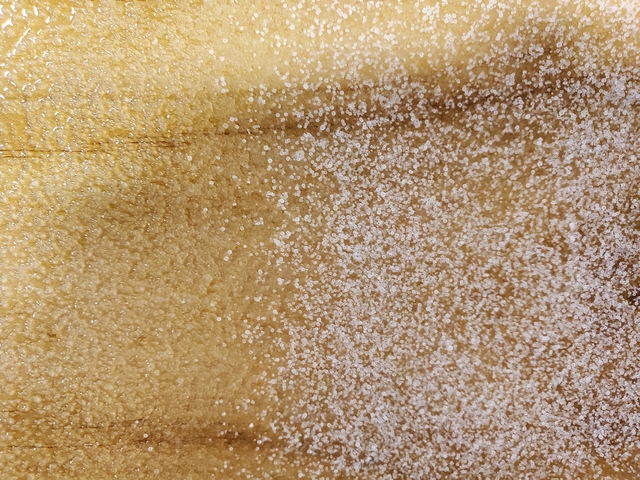
The final method I’ll describe is what I call the lost method. Apply the epoxy to the surface and then broadcast a grit media such as sand, sugar, or salt onto the uncured epoxy surface. After the epoxy cures (usually the next day) clean the grit media away.
For a more aggressive nonskid surface, use salt or rock salt. For a smoother nonskid surface, use granular sugar or sand. Be sure to apply the grit media uniformly across the entire surface so that when washed off with water or brushed off and vacuumed away, the surface texture is consistent. The resulting surface will have hollows or craters whereas the other two methods create bumps on the surface. The lost method surface is a little harder to keep clean because the tiny hollows catch water and dirt, but it still makes for a great nonskid surface.
I have used these different methods for nonskid surfaces for different applications.
For a teak and holly cabin sole I did, where I want to see the beauty of the wood, I put the nonskid onto the holly strips and not on the teak surface. Nonskid is less apparent on lighter colored surfaces. If the nonskid is across the whole surface it may look a little cloudy or hazy, and you wouldn’t be able to see the wood as well. Smoother nonskid media like sand or sugar works best to achieve this.
For the deck of a boat, a coarser surface is needed. In this case, I’d choose a more aggressive nonskid material. This could be crushed walnut shells or even a coarse sandblasting media.
There is no single way to achieve a good nonskid surface. Experiment with these materials and methods to determine the best approach to getting exactly the nonskid qualities you want.


 Listen Now
  Add to Playlist