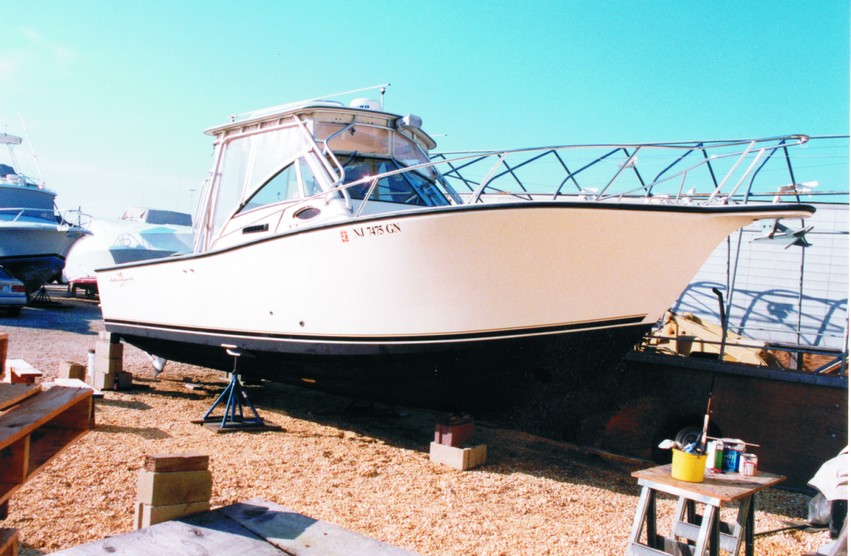
White cabin cruiser resting on blocks in a gravel boatyard. Bricks support the hull; a small workbench with paint sits nearby. Text on hull reads 'NJ 745 GN'.

Installing a Bow Thruster

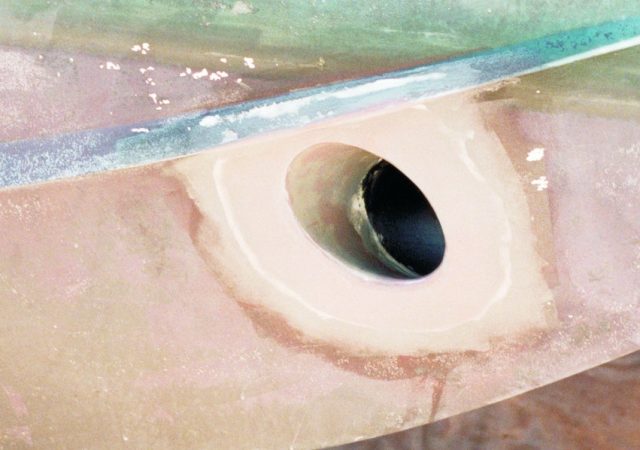
Above: After installing the bow thruster, the fairing compound is sealed with epoxy, and bottom paint is applied to the boat’s exterior.

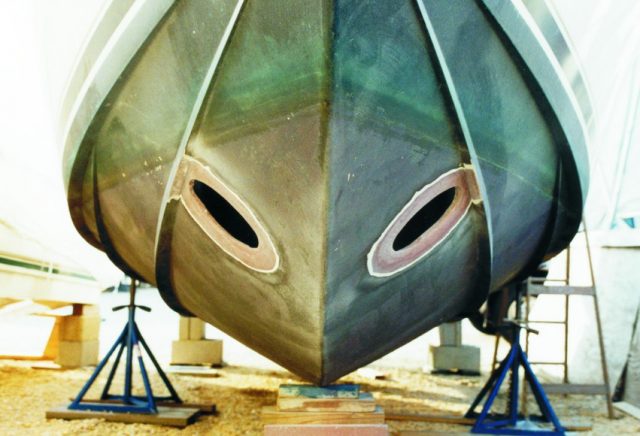
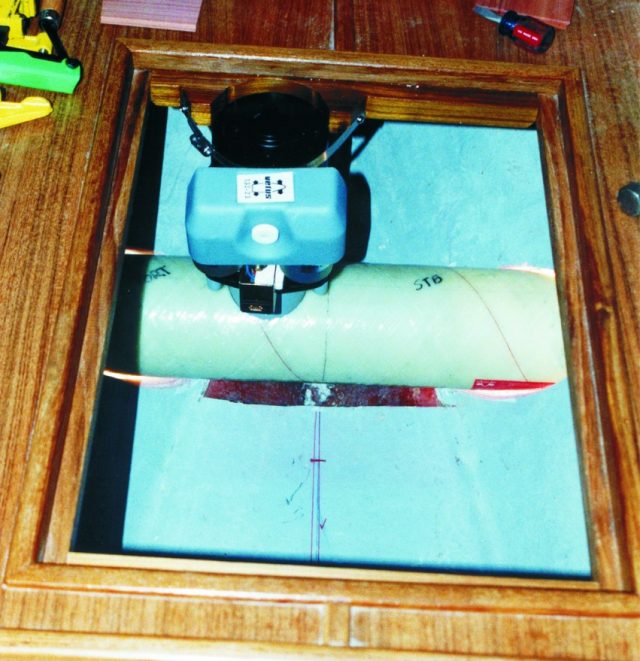
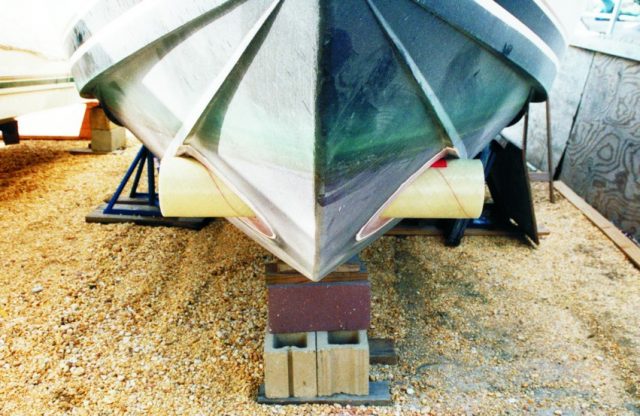
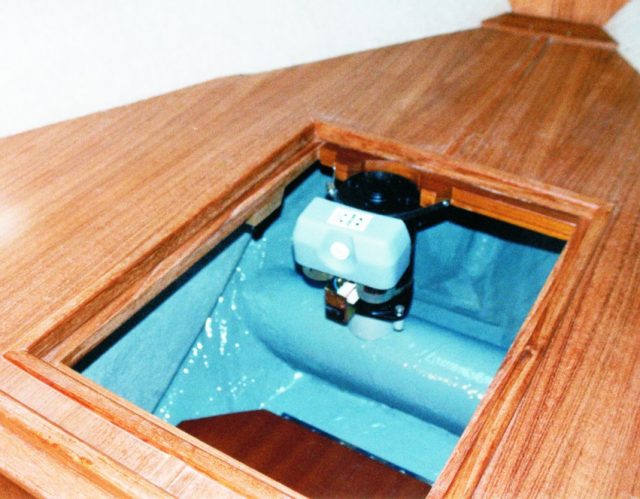
Island Heights, New Jersey architect, John B. Wilson, needed to install a bow thruster in his 26′ Albermarle sport fisherman, using WEST SYSTEM® Epoxy products. The toughest part of the job was cutting through the 1″ solid hull laminate. After trying several tools, he had success with a Roto Zip™ with a ½” carbide bit by making two ½” deep passes. The only other difficult job was cutting away a portion of the floor in the storage area under the V-berth to make room for the 5″ diameter thrust tube. The Vetus unit Wilson used delivers 77 lbf of thrust. In hindsight, Wilson says he should have used the next size larger unit. It delivers more thrust and uses the same size tube, but the larger motor would have been more difficult to fit under the V-berth.

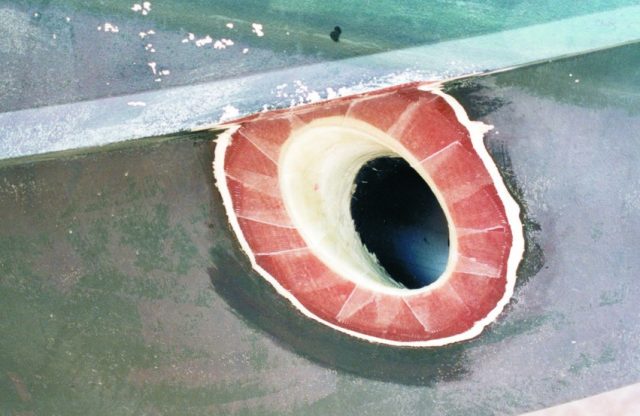
Wilson’s photos documented the sequence of steps for installing his bow thruster.
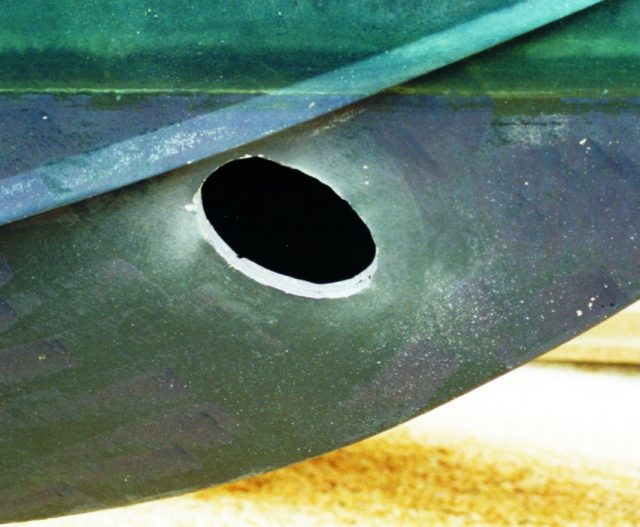
An circular hole in a green curved metal surface. The hole is cut through, revealing a dark interior. Outdoor setting with a ground visible below and a green panel above. Boat hull resting on metal stands in a shipyard drydock; two oval openings dominate the bow, with greenish panels reflecting sunlight, surrounded by scaffolding, blocks, and a gravel surface. Interior view of the bow thruster positioned for proper motor clearance. Bow of a boat is propped up and supported by concrete blocks and wooden beams in a gravel boatyard, with trailers and siding panels nearby. Reinforcing fabric is applied to the exterior of the joint. The fabric extends from the edge of the bevel to the inner surface of the bow thruster tube. A circular pipe opening in a pale pink surface, surrounded by white sealant. The dark interior suggests a hollow passage; the scene resembles a workshop or boat repair area. The interior joint is filleted and reinforced with fabric before painting.