Understanding Carbon Fiber
Spring, 2026

GET STARTED
FREE PRINT & DIGITAL EDITIONS
Spring, 2026
Carbon fiber is strong, lightweight, and looks stunning, but why is it used? Do I even need it? Why does it seemingly attract loads and crack before anything else? To understand these questions and learn how to use it properly in your repairs, we need to understand what carbon fiber is and why it is so awesome!
Carbon fiber is made of long chains of carbon atoms that have a tight crystalline arrangement. The manufacturing process typically begins with materials such as polyacrylonitrile (PAN), pitch, or rayon. These materials are spun into long strands, then heated to extremely high temperatures, between roughly 1,800°F and 5,400°F (1,000°C and 3,000°C). The heating chamber is generally filled with inert gas such as nitrogen to prevent combustion or deformation. Heating to these temperatures removes nearly all non-carbon components, resulting in fibers composed primarily of crystalline carbon. The resulting atomic structure gives carbon fiber those insane properties it is known for.
| Carbon Fiber | Fiberglass (E-glass) | |
| Tensile Modulus | 390 GPa | 72 GPa |
| Density | 1.9g/cm3 | 2.54 g/cm3 |
This is why it is commonly found in high-end speed boats, high-speed cars, sporting goods, and aerospace applications where strength and weight are limiting factors. When these carefully engineered structures need repairs, those need to be done with carbon fiber as well to preserve the stiffness and strength of the original design. Fortunately, WEST SYSTEM® works exceptionally well with carbon fiber, so there is no need to shop around.
Everything that makes carbon fiber so awesome also makes it ill-advised as a universal repair material. When an item is engineered, the material’s performance properties are considered when determining the laminate thickness and the placement of reinforcements.
Think of stringers on a boat. The stringers are engineered to carry the loads from the hull, and the entire structure works as an integrated system. When you add reinforcement to a single stringer, it can create hard spots or stress concentrations which increase the likelihood of repeated damage to the area.
This stiffness mismatch is key to why carbon fiber often cracks before the surrounding fiberglass. When force is applied, the carbon fiber repair and the fiberglass laminate both deflect the same amount. However, the carbon fiber has a tensile modulus, or stiffness, five times more than fiberglass. This means carbon fiber requires five times the force to move the same distance as the fiberglass. Unfortunately, the carbon fiber is not five times stronger than fiberglass, so under the same deformation, the carbon fiber experiences five times more force and reaches its failure point first resulting in cracks.
Picture two springs—one stiff and one flexible—hanging with the same weight attached. The stiff spring stretches far less, resisting deformation. Imagining our stiffer spring is like our carbon fiber, it would require five times the amount of weight to stretch the same distance as the flexible spring representing the fiberglass. The carbon fiber may be much stronger than the fiberglass, but again, it is not five times stronger, which is why it is often the first to fail.
Imagining our stiffer spring is like our carbon fiber, it would require five times the amount of weight to stretch the same distance as the flexible spring representing the fiberglass.”
~avery
Matching the same thickness and materials as the original laminate is often the best way to prevent cracking.
There are two main types of carbon fiber repairs: structural and cosmetic. For structural repairs, aligning the new fibers with the original fiber direction is more important than with fiberglass. Most of the carbon fiber’s strength runs along the fibers, so changing fiber directions can impact the strength of the laminate. As you grind the repair area and create your scarf angle, the fiber orientation becomes visible.
For best results on structural carbon fiber repairs, we recommend using a 20:1 scarf ratio. This is larger than the typical 12:1 ratio used for fiberglass. While this may seem daunting, carbon fiber laminates are often thinner than their fiberglass counterparts, resulting in a similarly sized scarfed area. The longer scarf angle helps the forces transfer more gradually between the repair and the undamaged laminate. Structural carbon fiber can be successfully repaired with WEST SYSTEM 105 Epoxy Resin® and any of the 200 series hardeners.
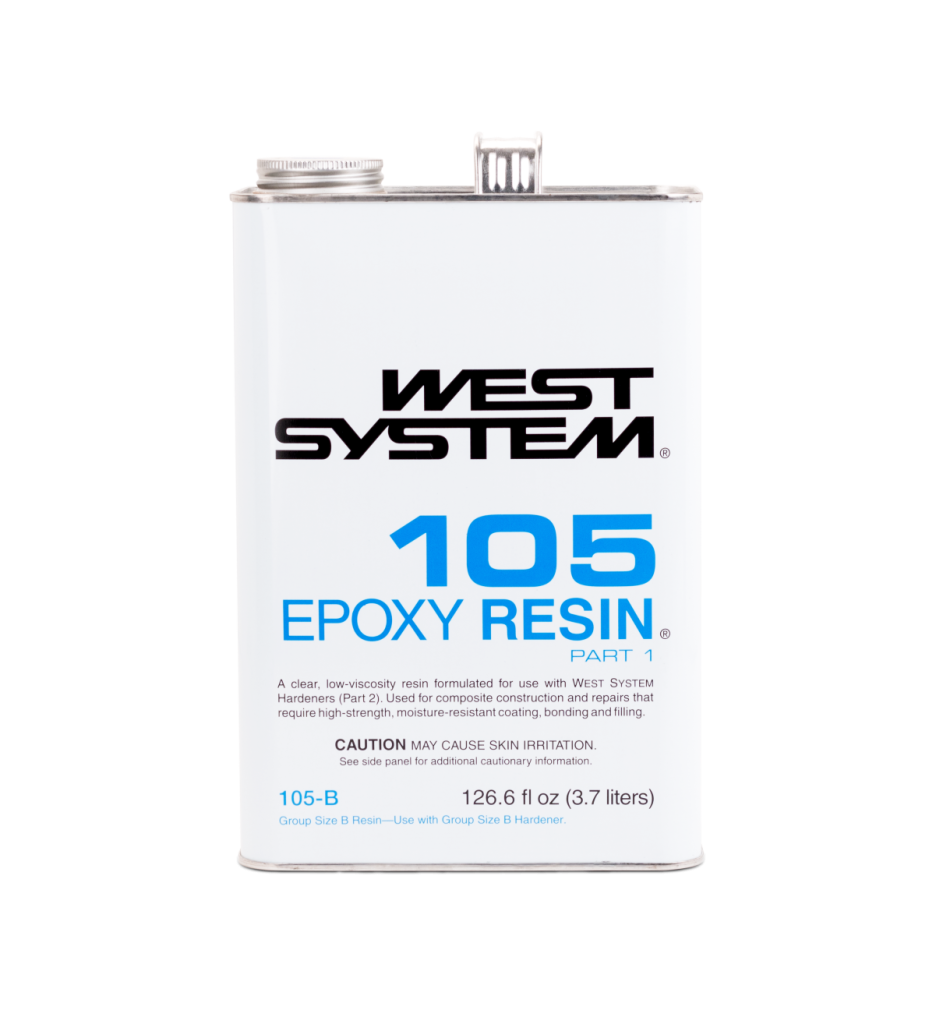
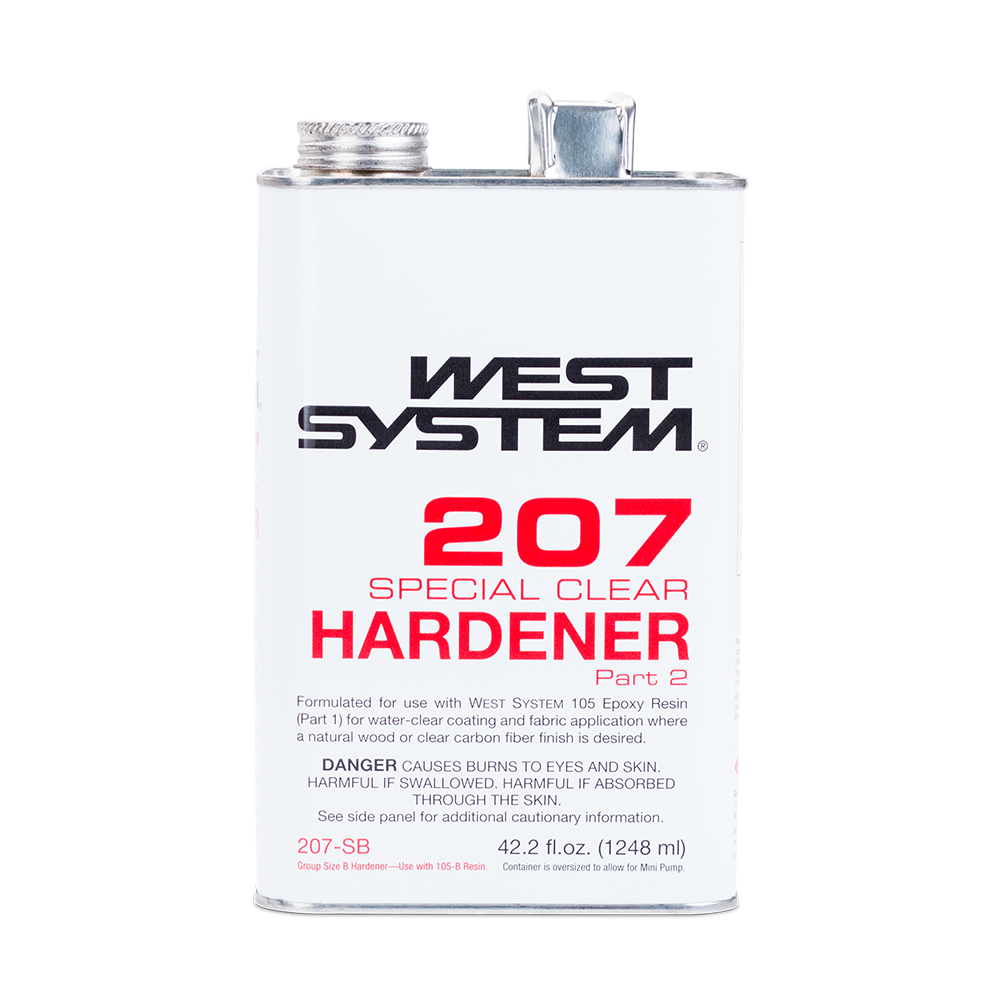
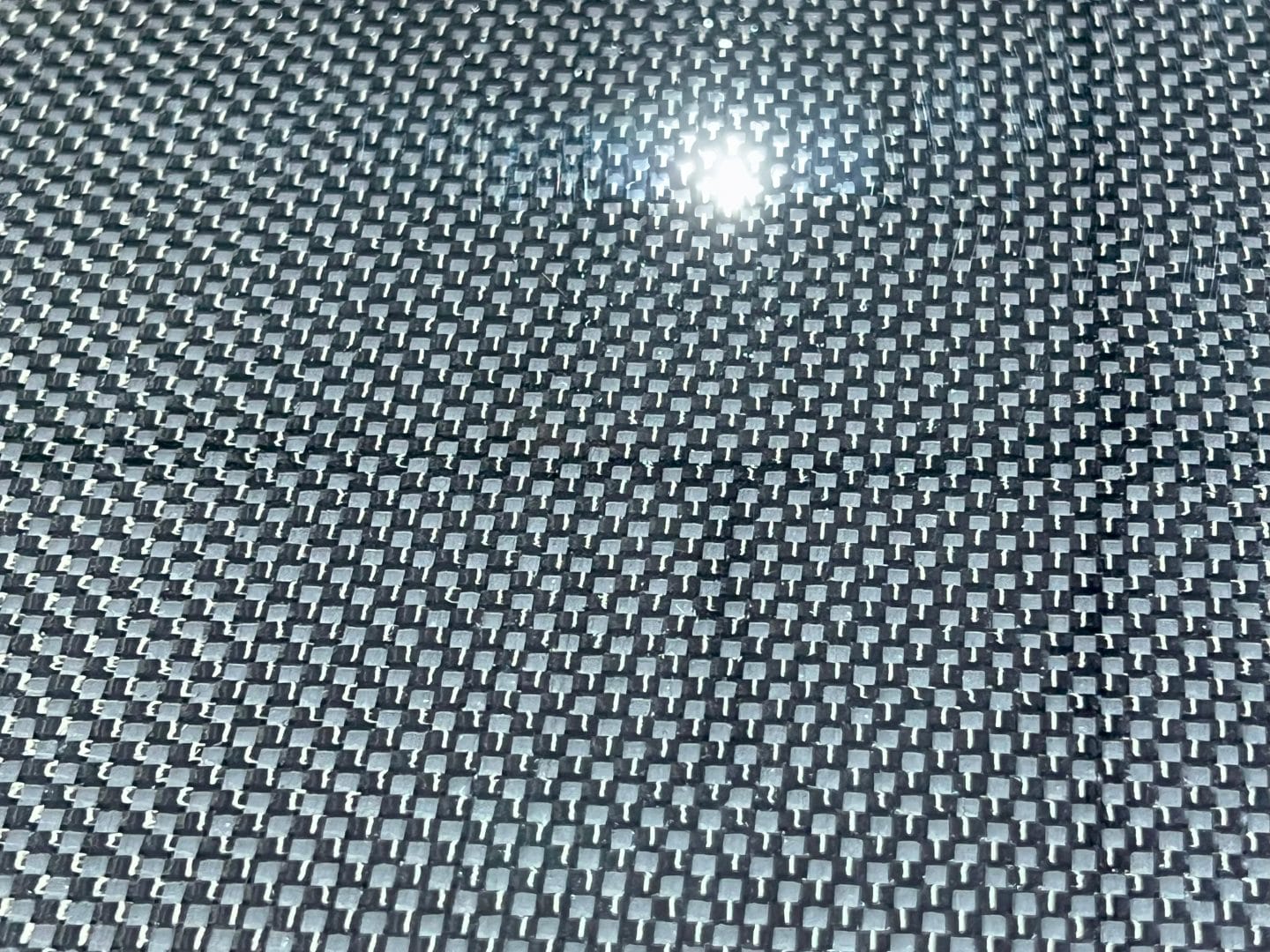
Cosmetic carbon fiber (or carbon fiber skinning) is typically a thin layer on the outside of non-structural components that gives the illusion of the part being built of carbon fiber. This is generally done because carbon fiber looks cool, especially with certain fabric weaves. When repairing cosmetic carbon fiber, we recommend using WEST SYSTEM 105 Epoxy Resin with 207 Special Clear Hardener® for a clear finish to keep the carbon looking sharp.
Since the carbon fiber is cosmetic, it is not structural and does not need to be scarfed into the surrounding area. You can simply cut away the damaged carbon fiber and replace it with a new piece. Try to line up the weave direction of the new piece and existing carbon to minimize the appearance of the repair. Generally, the repair is still visible using this technique. For a seamless repair, it may be easier to remove the entire outer layer of carbon and replace it with a new one. If this isn’t practical, a new layer of carbon can be adhered to the top.
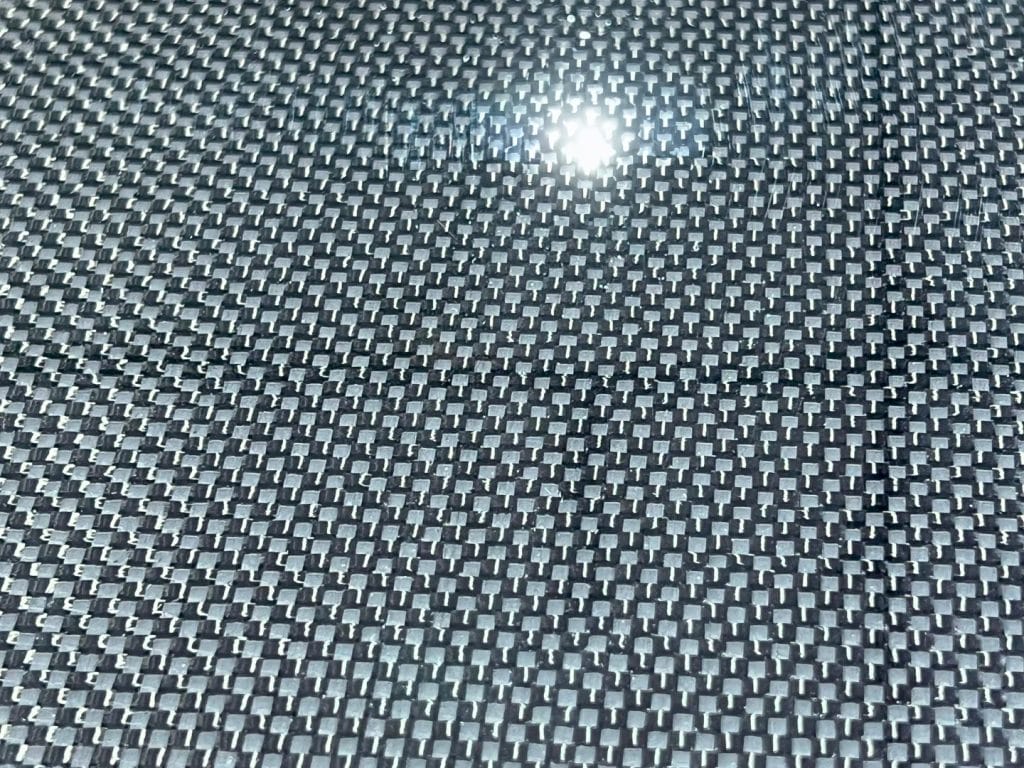
Carbon fiber can also be difficult to wet out because it often has a very tight weave, and the black color makes it hard to see which areas have been saturated. Because of this, we recommend wetting the surface with epoxy, then placing the dry fabric into it. It is much easier to pull the epoxy up through the tight weave than force it down through. It may also be helpful to add some bright lights to see slight differences in color.
Carbon fiber is an incredible material. It’s strong, lightweight, and sleek, but like all high-performance materials, it demands respect. Its stiffness and low weight make it unbeatable when properly designed into a structure, yet those qualities can cause problems when used carelessly in repairs. Understanding how carbon fiber behaves can make the difference between a lasting repair and a repeat failure. Using WEST SYSTEM 105 Epoxy Resin and 200 series hardeners can keep parts strong for any structural needs, but when paired with 207 Special Clear Hardener, it is easy to make it look good, too.
Whether restoring a part or touching up a cosmetic weave, the goal is to work with the material, not against it. Remember, the next time you reach for that roll of carbon fiber, it is not just about making something look cool, you have to understand why it’s strong and how to keep it that way.
Hooke’s law is the formula that is used to calculate the variables of stress (σ), strain (ε), and tensile modulus (E). It states that stress (force per unit area) is proportional to strain (deformation per unit length), and that relationship is governed by a material’s tensile modulus (stiffness). A carbon fiber repair and the surrounding fiberglass laminate are going to experience the same strain, however, because the tensile modulus is five times higher for carbon, the stress is also five times higher.
Read more articles like this one! Check out our “COMPOSITE FABRICATION” Category.


 Listen Now
  Add to Playlist