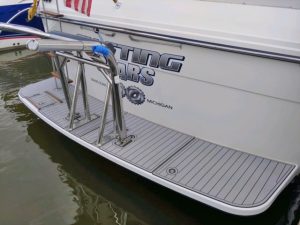
WEST SYSTEM Aids the UN FAO’s Mission to Help Fishing Communities
November 14,
2026

GET STARTED
FREE PRINT & DIGITAL EDITIONS
November 14,
2026
From a local Filipino community to riverside workshops in South Sudan to the FAO headquarters in Rome, we are proud to feature Matthew Walsh’s story.
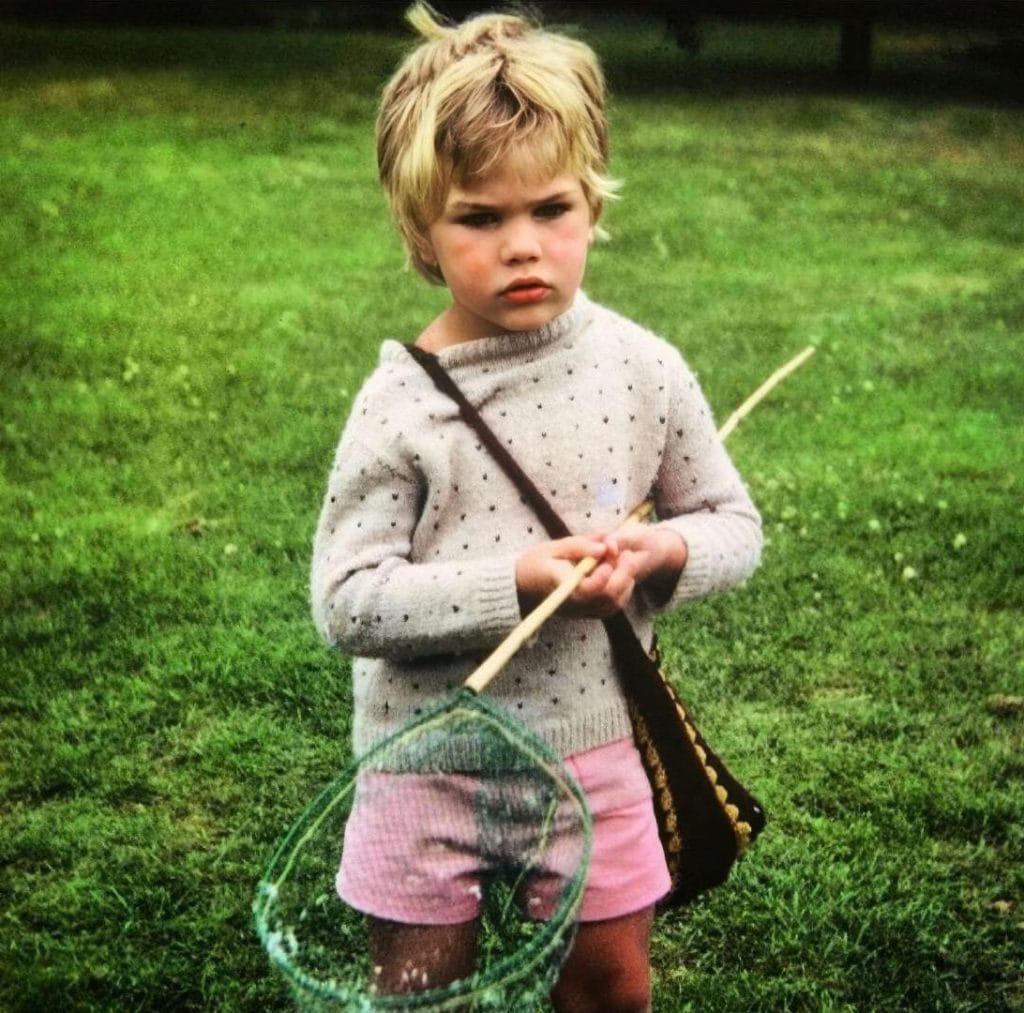
This photograph tells you almost everything you need to know about Matthew Walsh. He is about three years old, somewhere in England, holding a fishing net, wearing an expression of fierce concentration. He looks like he’s been dragging rivers since before he could tie his own shoelaces – because he has.
That child grew up to become a United Nations Food and Agriculture Organization International Consultant, a naval architect, boat builder, a professional scientific diver, and a board member of the European Commission’s Mission Ocean programme, helping steer about eight billion euros of research funding. Along the way, he also became a committed WEST SYSTEM® user.
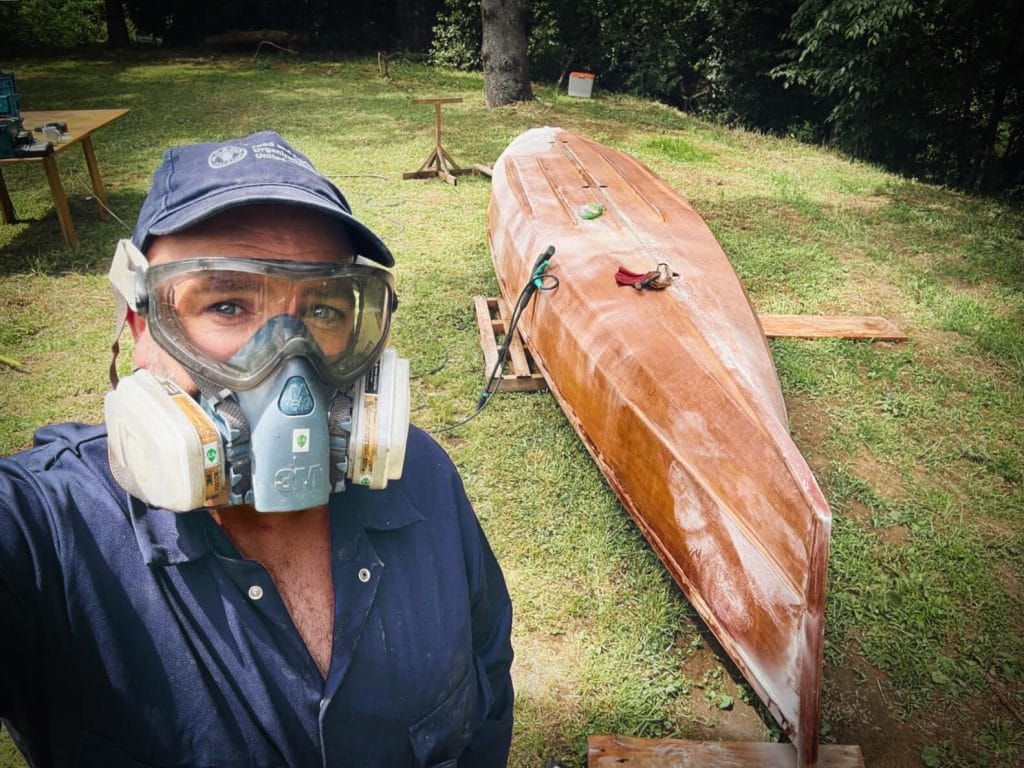
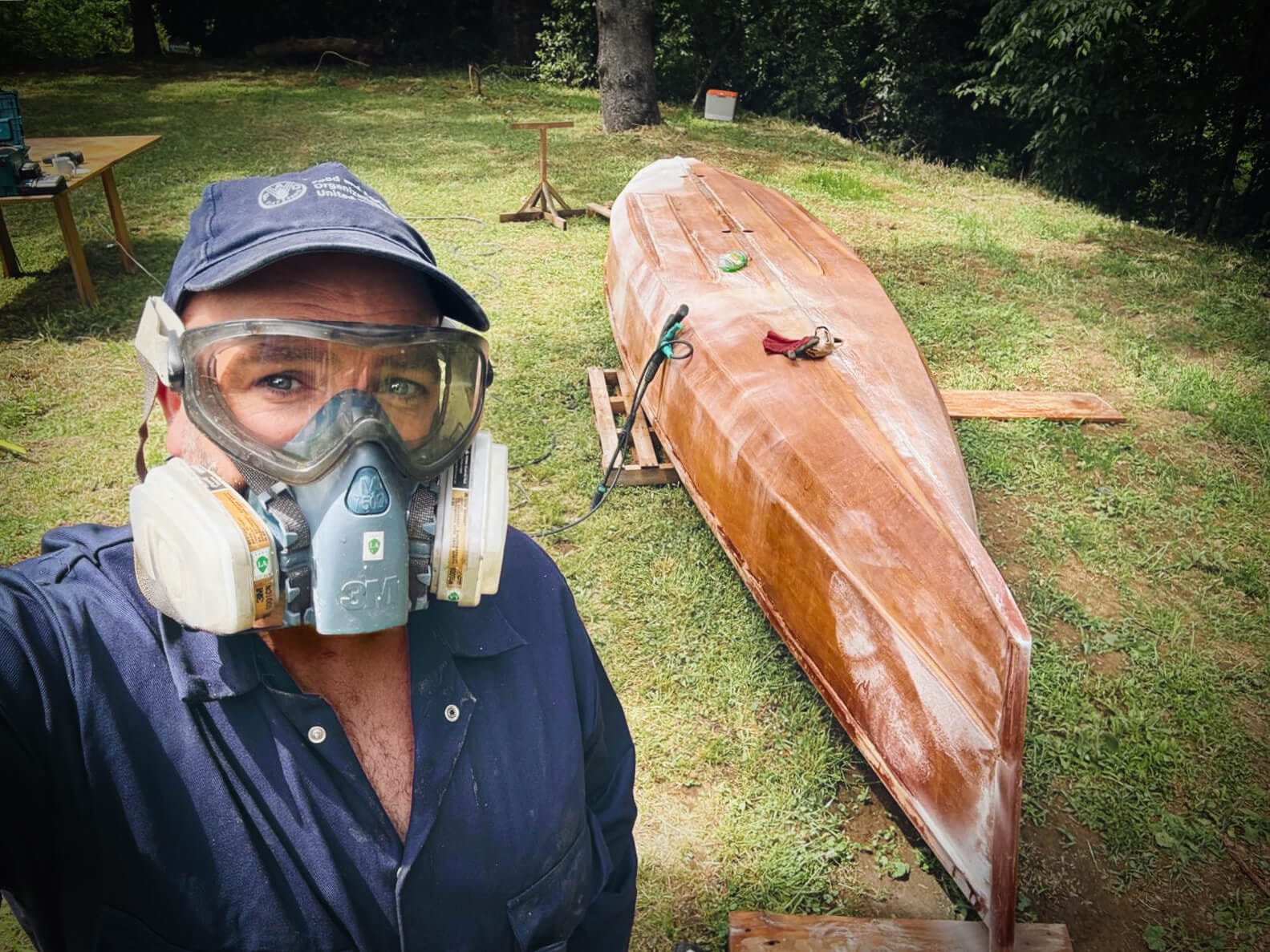
This relationship that has taken his builds from remote Philippine islands, through active conflict zones in South Sudan, and finally to the garden of the UN FAO headquarters in Rome, where a 20′ (6.2 m) wooden canoe he built now stands as a permanent installation.
Walsh grew up in difficult circumstances, but he made up for what he lacked in conventional resources with curiosity. By 14, he was conducting formal ecological surveys of three local rivers and producing handwritten, illustrated portfolios of his findings detailed enough to earn a commendation from a professor at the local university. He also built underwater cameras to film fish. In his own words, he was obsessed with everything in the water.
By his early twenties, he was working as a professional scientific diver across the Asia-Pacific region, learning local dialects, conducting reef surveys, and gradually developing an understanding of the communities whose livelihoods depended on the sea.
It was during his time in the Philippines, he met the famous catamaran designer James Wharram and first learned the stitch-and-glue boat-building technique he still uses today. He also first reached for WEST SYSTEM there and learned that good materials alone don’t change the world.
In the early 2000s, Walsh tried to persuade local Filipino boat builders to adopt WEST SYSTEM Epoxy to make their vessels more robust and durable. They refused. Not because the product didn’t work, but because their community’s business model depended on frequent boat repairs. A boat that lasted too long would undermine not just their income but the entire informal timber and repair economy that sustained their community.
“If you do a copy-and-paste intervention without genuine buy-in, you don’t build trust and you lose long-term sustainability because the community simply isn’t interested.” Walsh says now.
This lesson shaped everything that followed. New products or ideas only work when the community understands and owns the decision to use them.
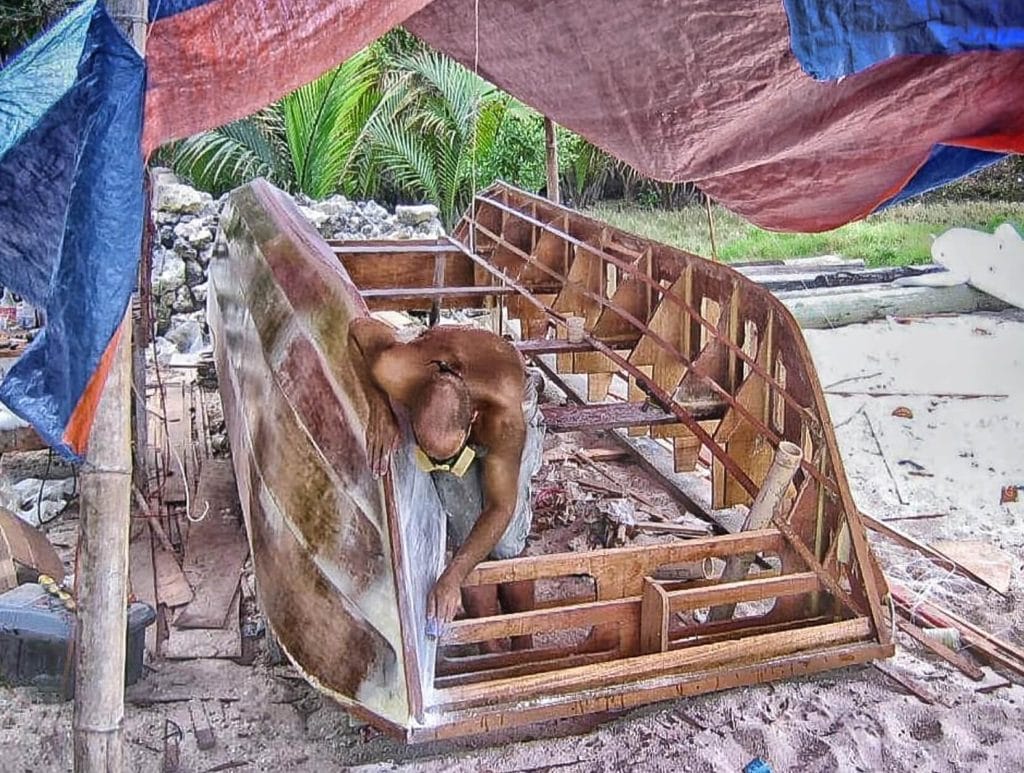
When Walsh joined FAO as an international consultant working on fisheries, he found a context where those conditions were finally met. In South Sudan, subsistence fishers using traditional wooden canoes spent a significant share of their income on constant maintenance and fuel. Boats that absorbed water dramatically increased in weight, slowing them and driving up running costs. Lighter, sealed boats meant less fuel, lower costs, and more productive fishing. The fishers wanted the change. They couldn’t access the materials.
WEST SYSTEM Epoxy absorbs into the wood, sealing it against water ingress, rot, and bacteria. The same product used on superyachts for teak and mahogany could be applied to a boat built by a subsistence fisher in one of the world’s poorest countries.
The problem was supply. Outside of South Africa, there was no established distribution chain on the African continent for WEST SYSTEM products. Walsh and a FAO colleague worked with Wessex Resins – the UK manufacturer of WEST SYSTEM – to develop a supply agreement.
Establishing that supply chain has been, in a way, more innovative than building the physical boat itself. Without it, the project goes nowhere.
Matthew Walsh
“Establishing that supply chain has been, in a way, more innovative than building the physical boat itself,” Walsh says. “Without it, the project goes nowhere.“
With the supply chain in place, Walsh ran workshops across South Sudan with local boat builders, most of whom had never attended school, couldn’t read or write, and had never used a ruler.
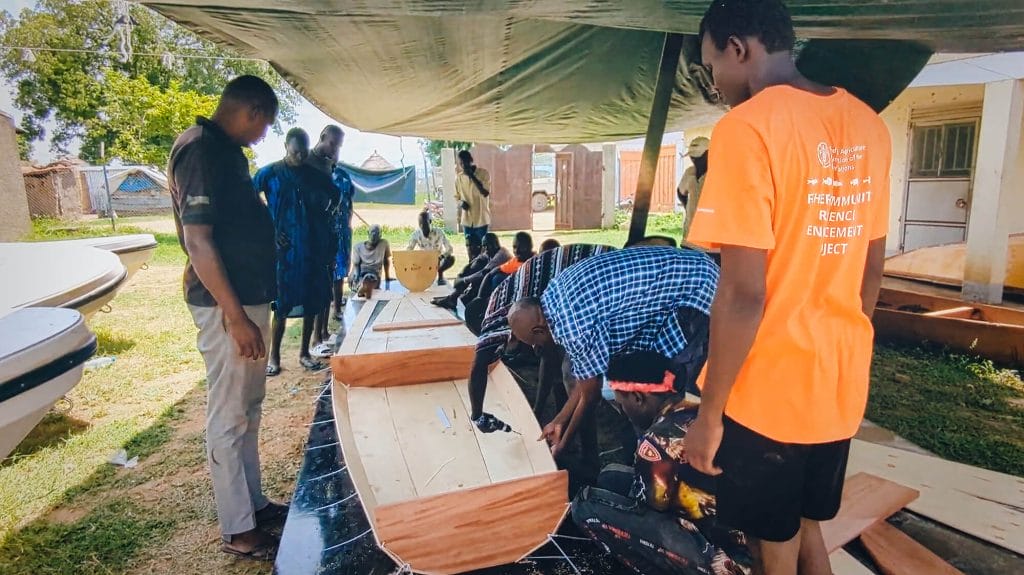
His method was entirely hands-on: physical demonstrations of buoyancy, structural integrity, geometry, and composite materials strength. He preferred a collaborative process in which the builders themselves decided what to adopt and how.
The results: approximately 800 canoes built with WEST SYSTEM in South Sudan, with the project continuing to expand. The Netherlands, which funded the initial program, has already expressed strong interest in extending it further.
In April 2026, FAO’s Assistant Director General called Walsh to say the Director General wanted a replica of the canoes built in South Sudan installed permanently at the FAO headquarters at Circo Massimo. The deadline was May 18, 2026.
Walsh sourced his materials through WS Marine Srl, the Italian distributor for WEST SYSTEM, based in La Spezia. Walsh traveled by train from Rome to La Spezia himself, collected the full order of resin, hardeners, fillers, and fiberglass cloth in person, and brought it back to the city. Then five days of building commenced.
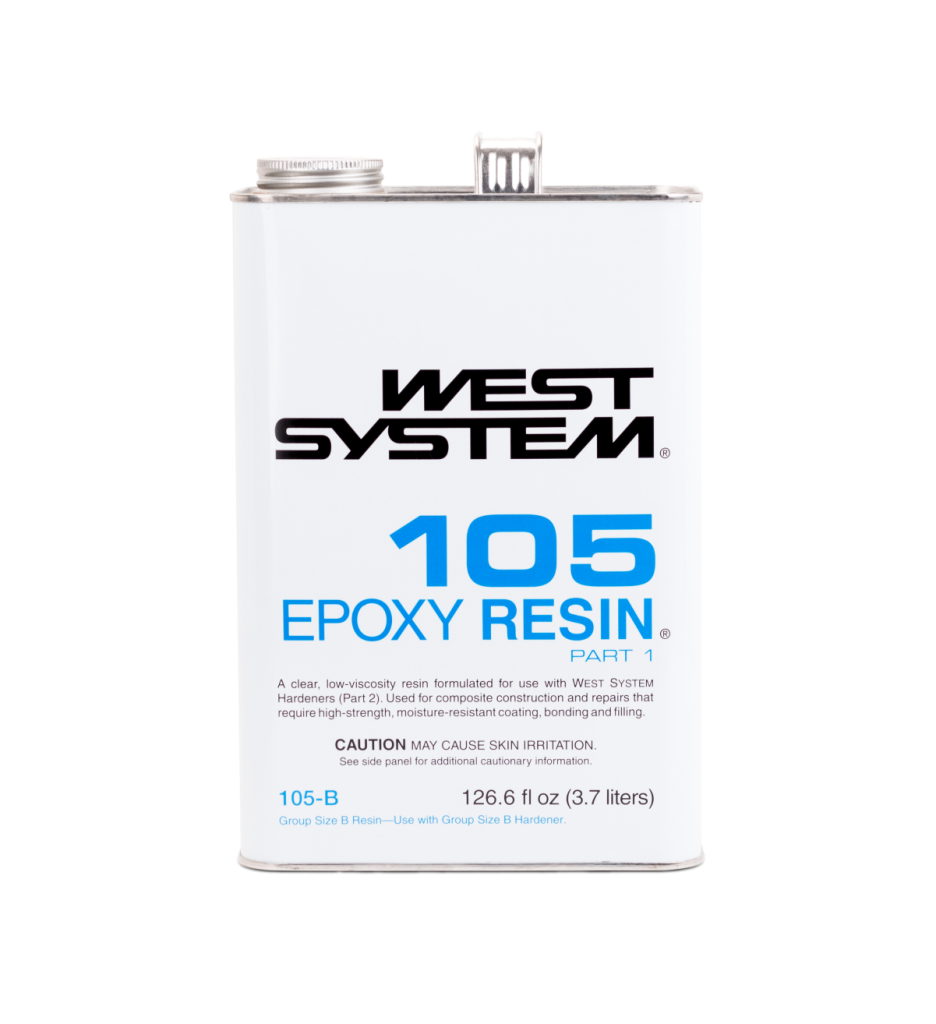
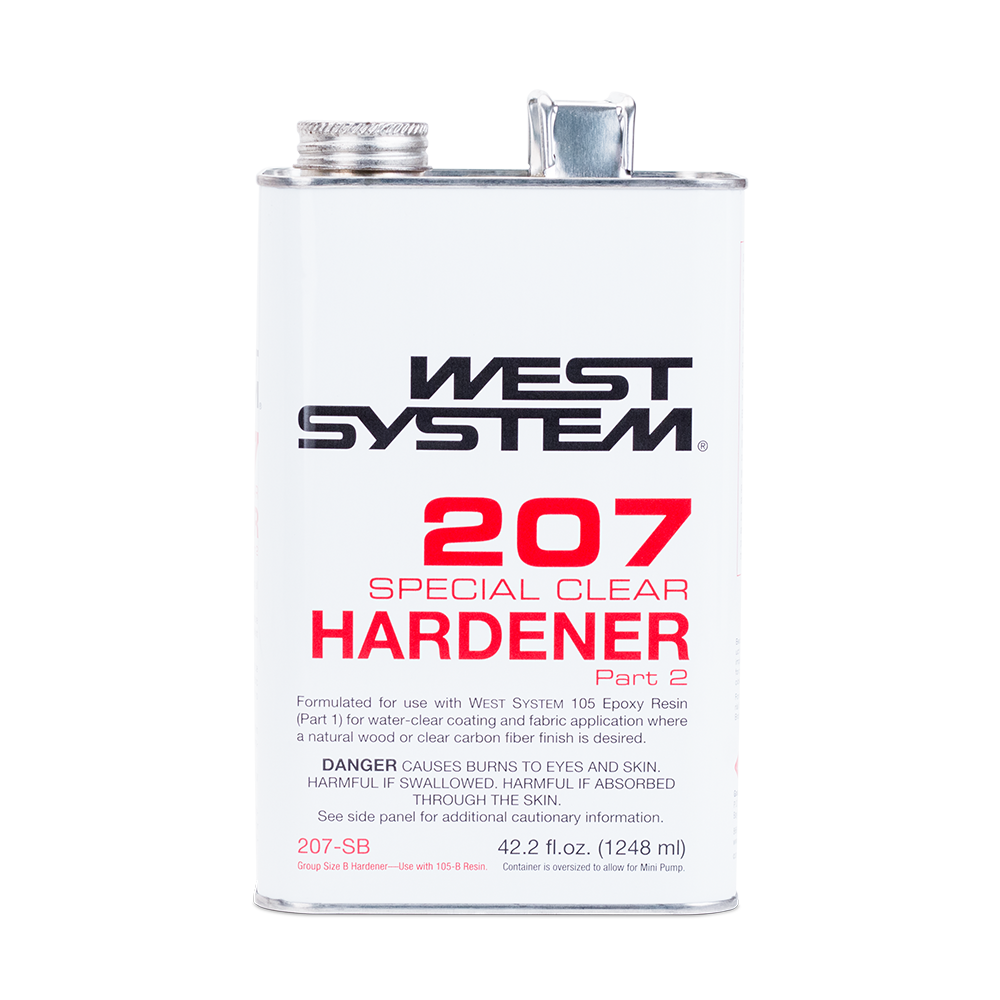
The stand-out product choice for the FAO canoe was 105 Epoxy Resin mixed with 207 Special Clear Hardener. The 207 Special Clear Hardener is formulated to produce a clear, non-blushing finish with excellent UV resistance when finished with a high-quality varnish or polyurethane topcoat. This is ideal when the epoxy coat itself is part of the finished piece’s visual appeal. Walsh wanted to give the canoe “a good look.” The epoxy then received a UV-protective topcoat.
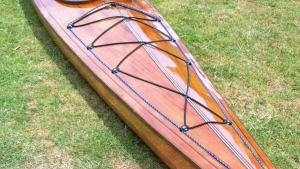
Seeing the finished boat, its warm honey-toned timber glowing through the epoxy coat, it’s clear that using 207 Special Clear Hardener was the right choice.
On the morning of May 18, 2026, the finished canoe was installed in the FAO Garden. The following day, the formal ceremony took place. Among those present were the FAO Director-General, the Dutch ambassador, and India’s Prime Minister, Modi.
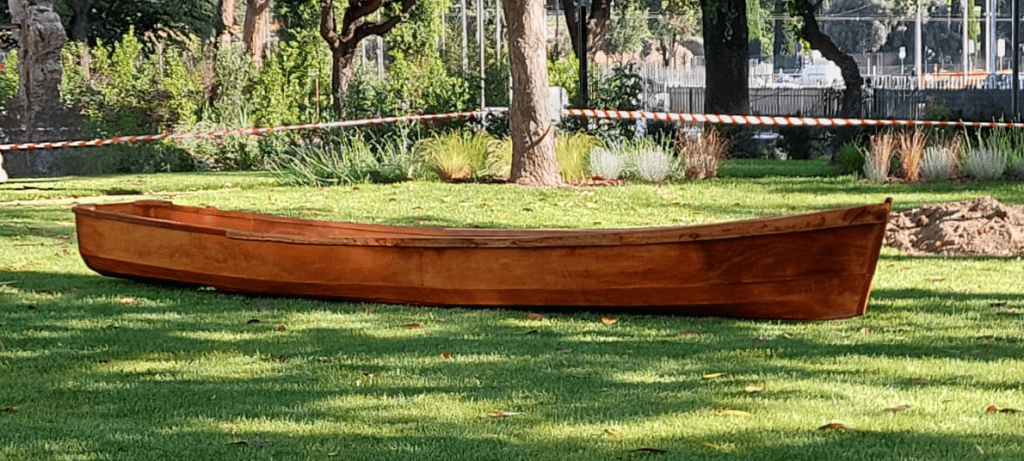
For Epoxyworks readers, the product story here is familiar: a stitch-and-glue canoe built with 105 Epoxy Resin, 207 Special Clear Hardener, fiberglass cloth, and fillers. It’s the context and the journey that make this story unique. The canoe in the FAO Garden carries two decades of lessons learned in the Philippines, South Sudan, and beyond.
WEST SYSTEM Epoxy performs the same way in a riverside workshop in South Sudan as it does in a European boatyard or the Michigan hometown where it was first formulated. That consistency is by design. For more than five decades, WEST SYSTEM products have been formulated to work reliably across drastically different conditions, from remote fishing communities to a five-day canoe build in Rome.
The canoe now has a permanent home at the center of the world’s most influential food and agriculture organization. It is a permanent record of the South Sudanese fishers and builders who made this program their own. It is also a record of the boy with a fishing net who never lost his passion for the water. WEST SYSTEM is proud to be part of that story.


 Listen Now
 Add to Playlist