Small Craft Builders Rendezvous
Spring 2009

GET STARTED
FREE PRINT & DIGITAL EDITIONS
Spring 2009
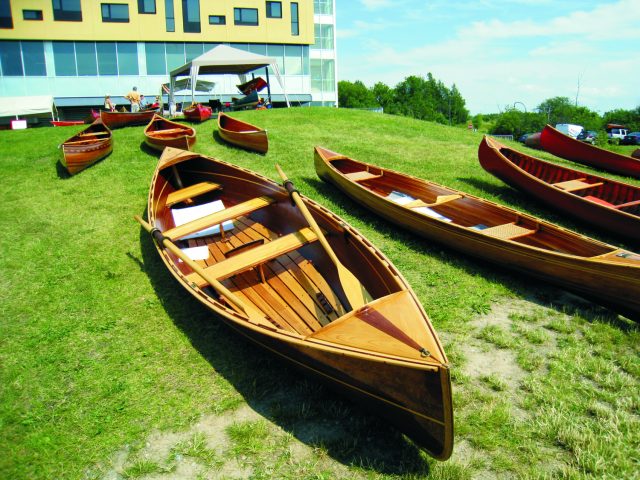
Above: At the Small Craft Builders Rendezvous, both wood/epoxy and traditionally built canoes and kayaks were on display.
In July 2008 I attended the Small Craft Builders’ Rendezvous in Peterborough, Ontario at the invitation of Ted Moores and Joan Barrett. Their company, Bear Mountain Boats, was one of the sponsors of the gathering which included modern wood and epoxy constructed boats as well as traditionally built wooden canoes. Those attending ranged from professional builders to serious amateurs.
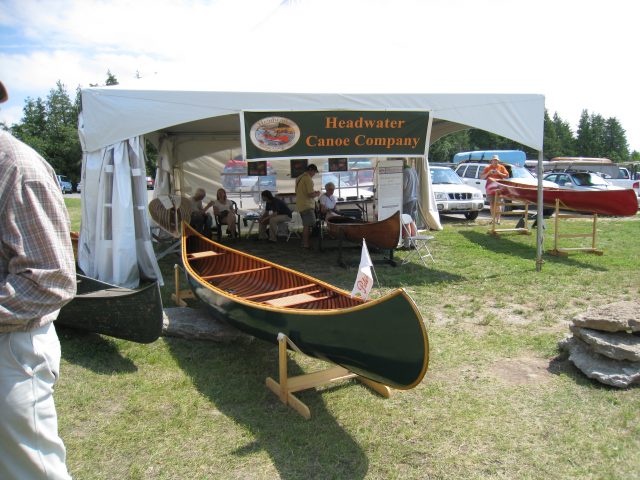
Approximately 75% of the boats displayed were traditionally constructed with steam-bent oak ribs and wide flat cedar planks that were canvas-covered. This was expected because many who attended were members of the Wooden Canoe Heritage Association who scheduled their annual gathering the same week as the Small Craft Builders’ Rendezvous. Trent University is ideal for the events. It’s located on the Otonabee River which is part of the Trent Severn Canal that travels from Lake Huron’s Georgian Bay to Lake Ontario via a series of locks. Another benefit of scheduling the events at the university was the availability of inexpensive dorm room accommodations which many of us took advantage of.
Throughout the event a number of demonstrations, seminars, and paddling excursions took place. The demonstrations included building a traditional canvas-covered wood canoe, paddle carving, deck inlay techniques (see Marquetry Made Easy), seat caning, and rib and stem repairs to traditional craft.
On Saturday Skip Izon, builder of wood/epoxy canoes and kayaks from Shadow River Boatworks gave a presentation on canoe hull design and performance parameters.
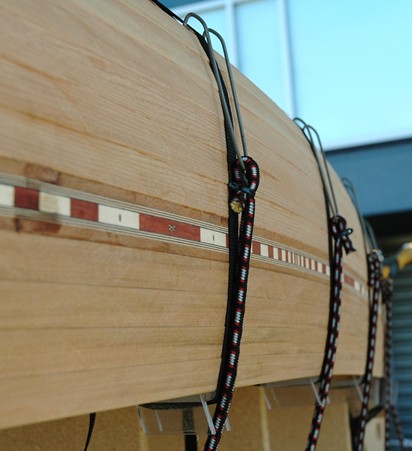
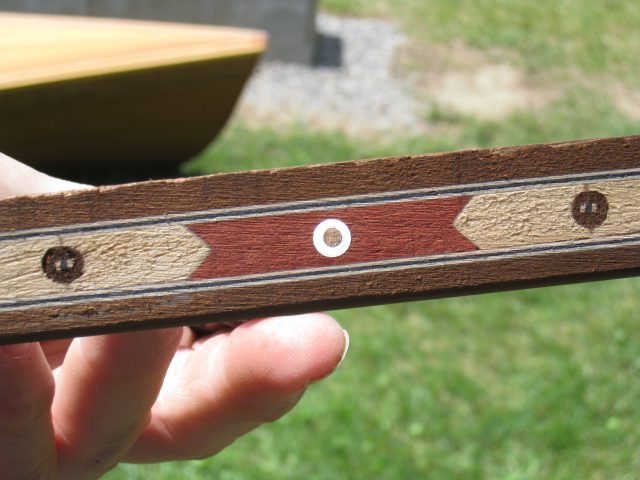
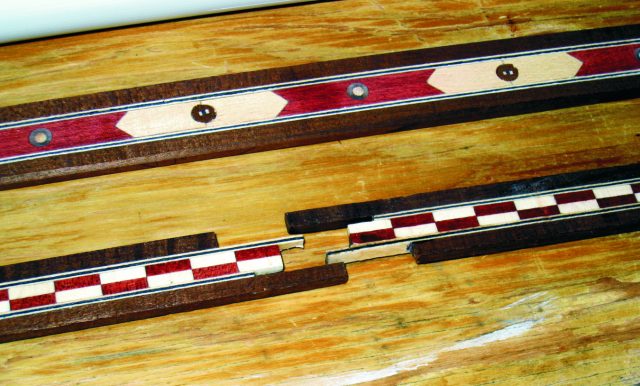
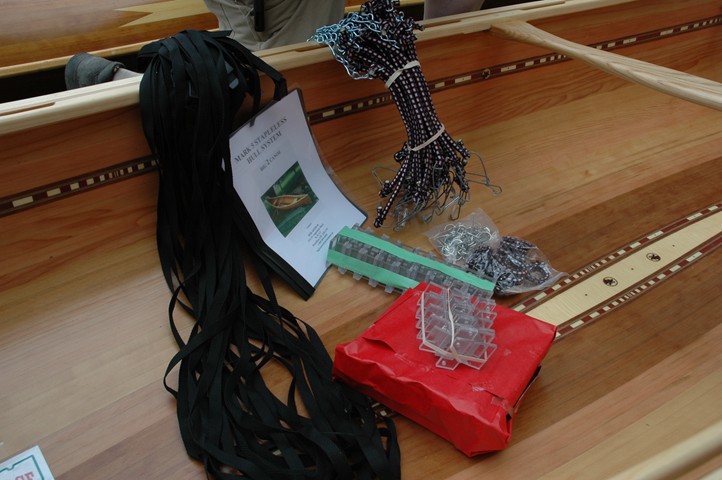
Ron Frenette, owner of Canadian Canoes, Bob Arthur, and Brian Heaslip demonstrated an alternative strip building technique without the use of staples and incorporated fancy inlay accent strips in their demonstration. Bob Arthur makes the accent strips from hundreds of pieces of various colorful woods that he glues together with 105 Resin and 207 Hardener. He makes these strips about 3′ long each and the ends are machined to interlock allowing you to make them to any length. The staple-free construction kits and fancy inlay strips are available from Canadian Canoes.


 Listen Now
  Add to Playlist