Dormer Window Repair

By Michael Huffman

A couple of years ago, I noticed that the bottom member of the double-hung window in my office dormer had begun to rot.

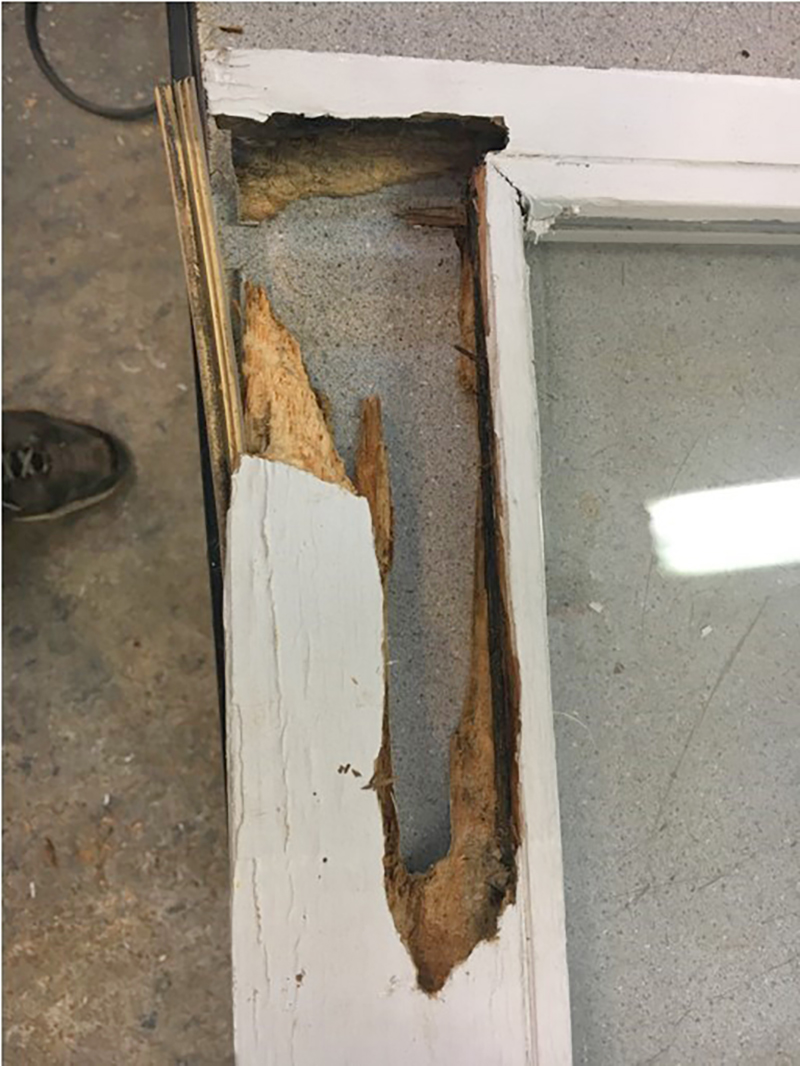
Knowing it would be difficult to buy a matching replacement, I decided to repair the window using WEST SYSTEM® Epoxy and fiberglass. I removed the sash from the frame and took it to my shop. The first step was to remove the rotted wood. It turned out the damage was extensive, affecting the wood all the way through the bottom member and into the vertical member.
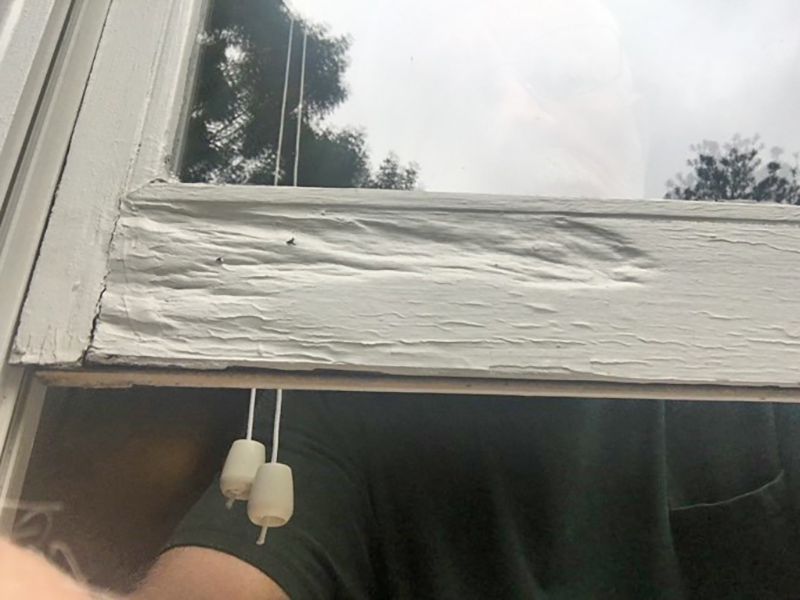
Window frame with peeling white paint; two white pull cords dangle from above, likely for blinds, while a dark interior and a tree-filled sky are reflected in the glass.
The bottom member before beginning the repair.
The door frame/threshold is deteriorated, rotting and peeling; wood crumbles away beneath a glass window, with scraps lying on the concrete floor nearby.
The rotted wood has been removed.

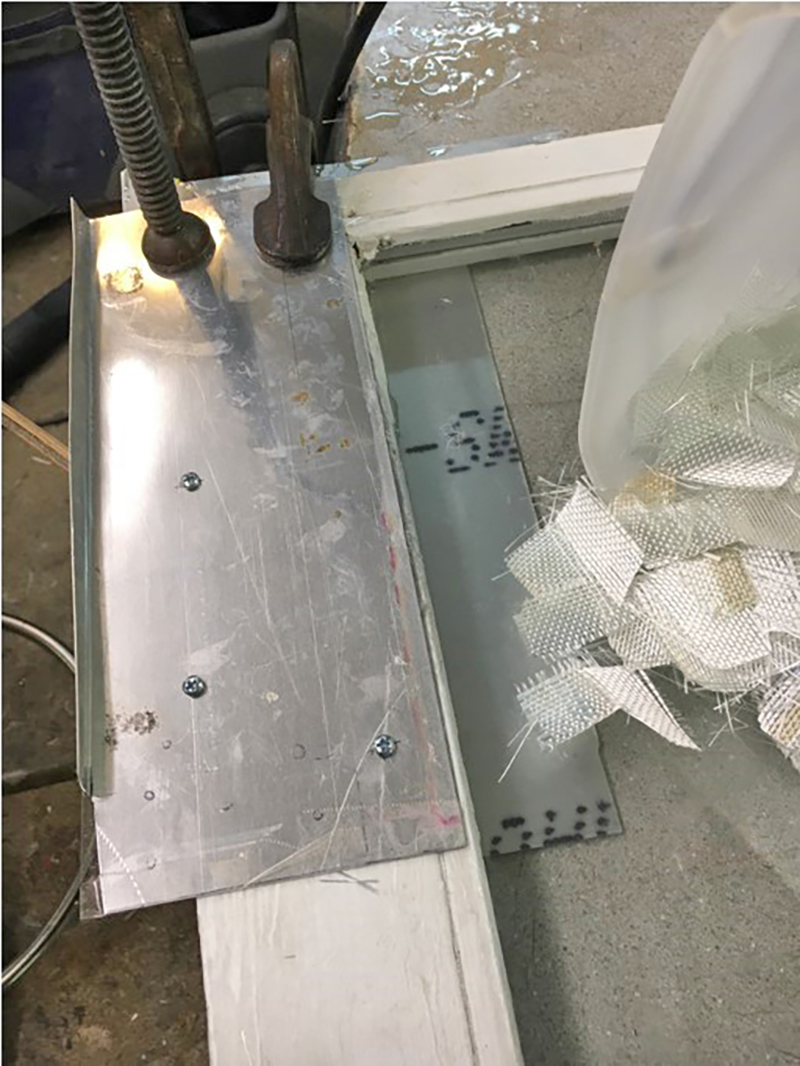
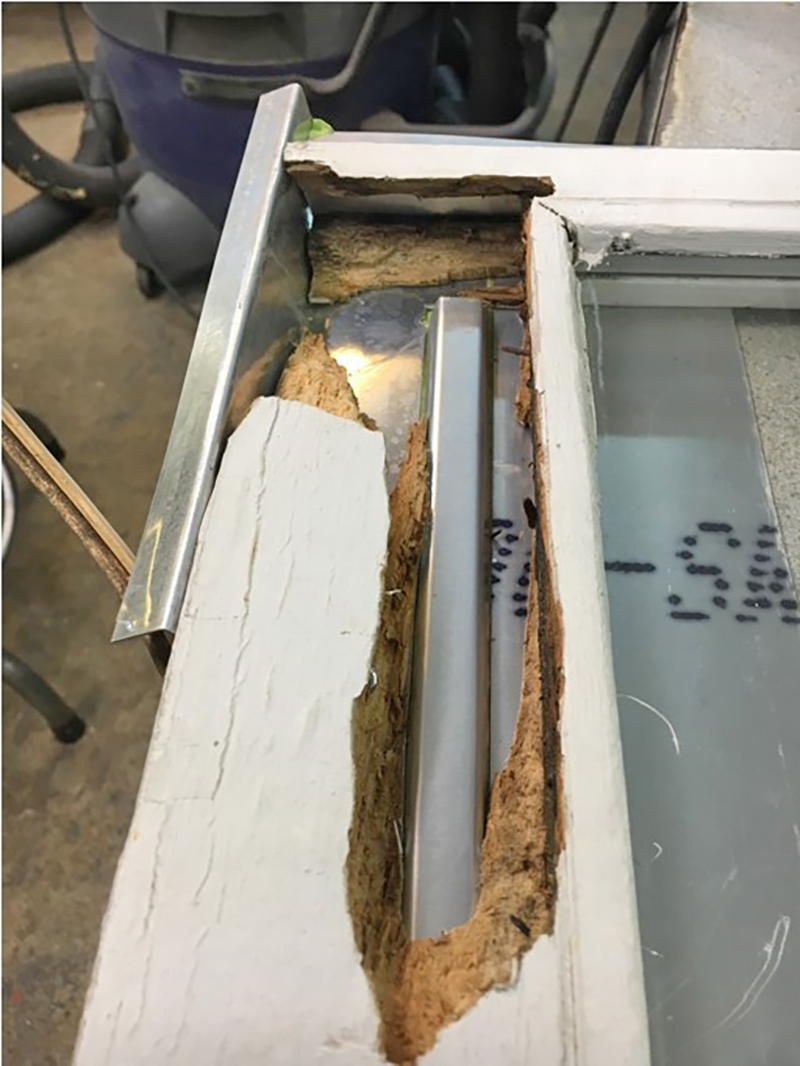
Although the outside surface of the bottom member was flat, the inside surface incorporated a groove about a half-inch wide. Using thin aluminum sheet metal, I fashioned a mold that duplicated the shape of the groove and the bottom surface of the bottom member. After applying mold release, I attached the mold pieces with some sheet metal screws to the good wood outside of the damaged area, then sealed the edges with masking tape.
An angled brushed-metal rectangular panel is bolted to a metal frame by two screws; a flexible conduit runs beside it in an industrial workshop with a concrete floor and debris.
The mold piece was screwed and clamped in place.
Metal panel across a metal track, taped with bright green painter’s tape over a central strip, screws visible at corners; in a workshop on a concrete floor beside a window.
The interior view of the taped mold piece.

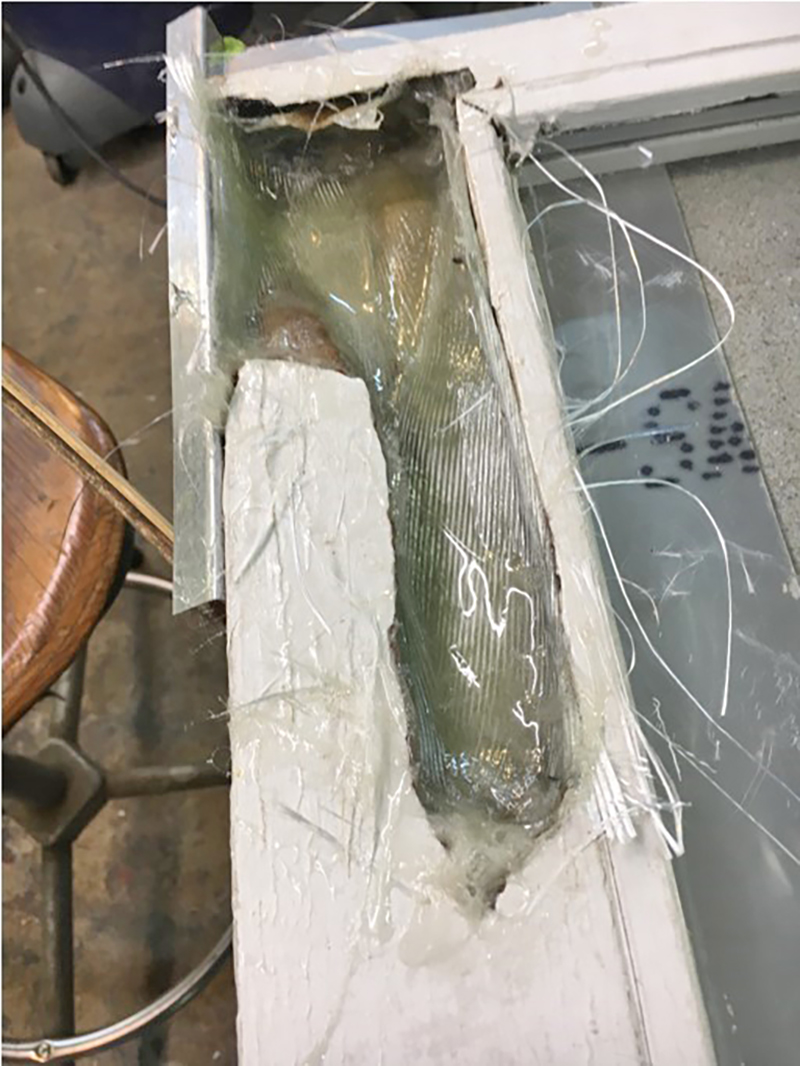
I then proceeded to wet precut pieces of fiberglass cloth, leftover from another project, with WEST SYSTEM 105 Epoxy Resin® and 206 Slow Hardener®.
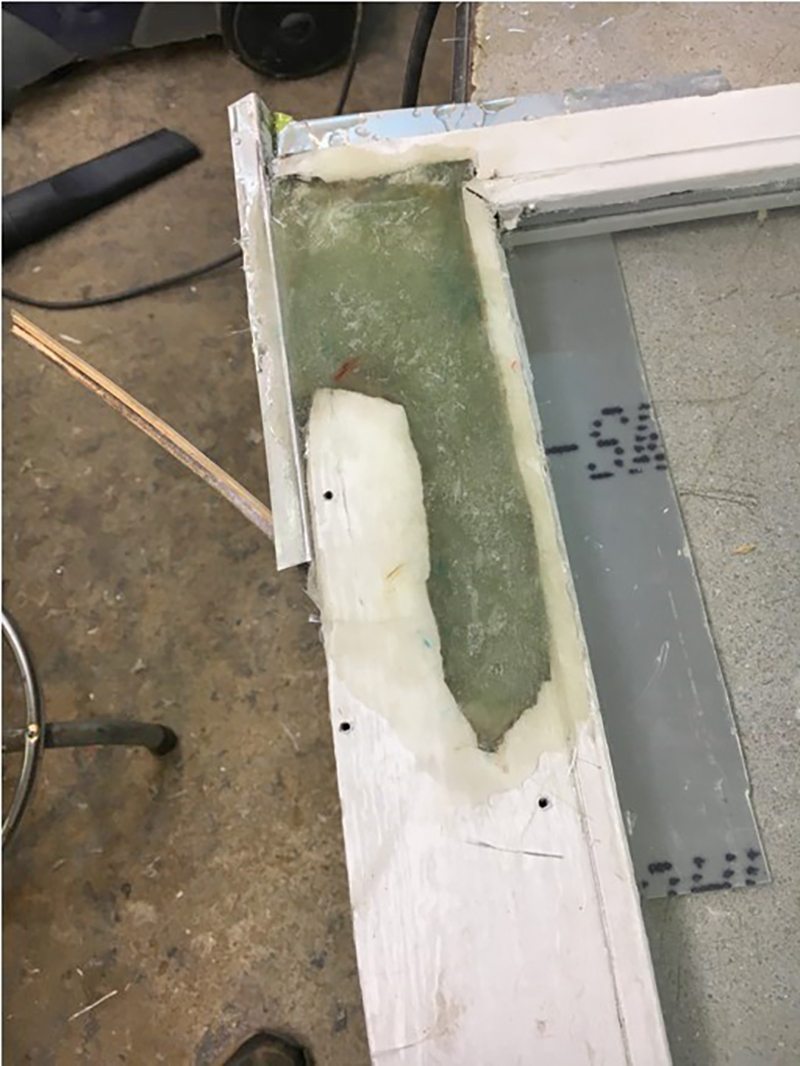
I laid them into the damaged area. This ultimately filled up the mold completely. I then screwed and clamped the final mold piece in place.

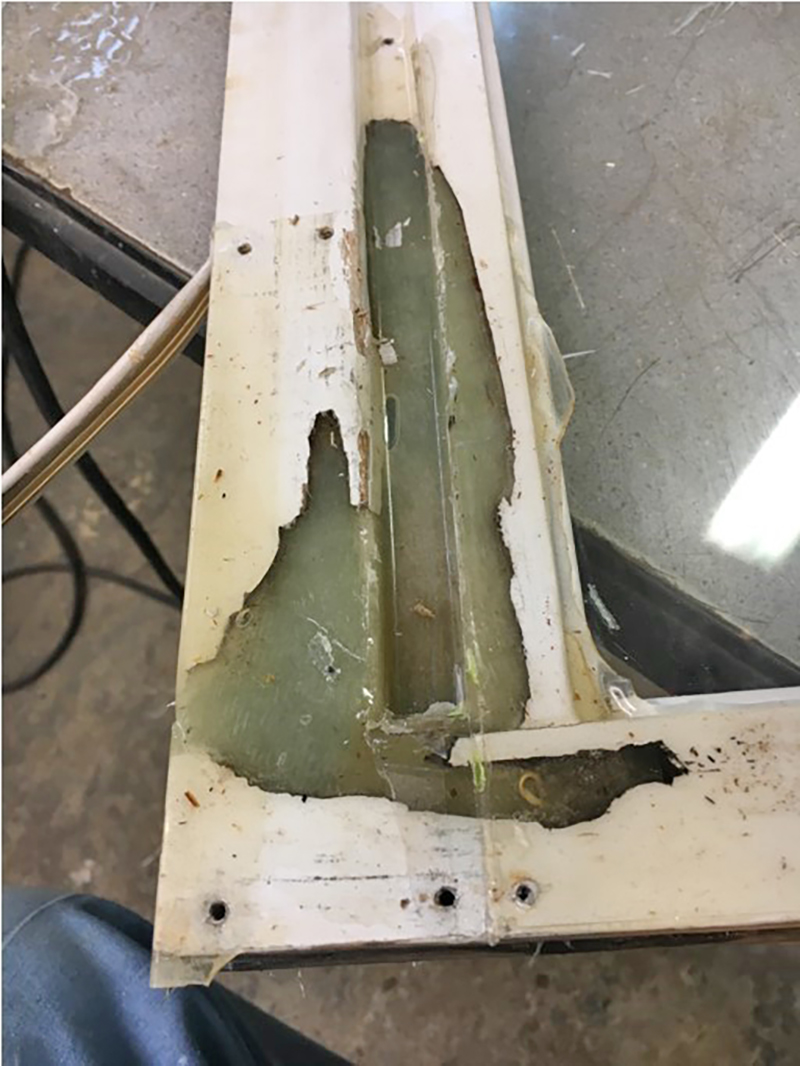
After the epoxy had cured, I removed the mold pieces and found the repair had been successful, accurately duplicating the shape of the repaired area.
Object: window frame with severely rotted, crumbling wood around the lower sash. Action: decay is disintegrating the frame, exposing the metal track. Context: in a dusty workshop/garage with scattered tools.
An exterior view of the taped mold piece.
An elongated greenish ribbed object protrudes from a broken plaster opening beneath a window; white fibers and plaster fragments cover its surface, set in a dusty workshop.
Wet-out pieces of fiberglass cloth were placed into the damaged area.
White-painted wooden door/window jamb; green expanding-foam sealant fills a gap between frame pieces; grey panel behind, metal strip with holes, and a cluttered workshop floor with cables and tools nearby.
Exterior view after the epoxy cured and the mold was removed.
Window frame and pane; the green sealant is peeled away, exposing chipped metal and hole-riddled edges. It lies on a workshop floor with loose cables nearby.
Interior view after the epoxy cured and the mold was removed.

I did a small of amount of handwork with a rotary tool to recut the seal groove in the bottom of the window. Then I sanded the repaired areas and applied latex primer and finish paint before reinstalling the hardware. The window looks good as new.
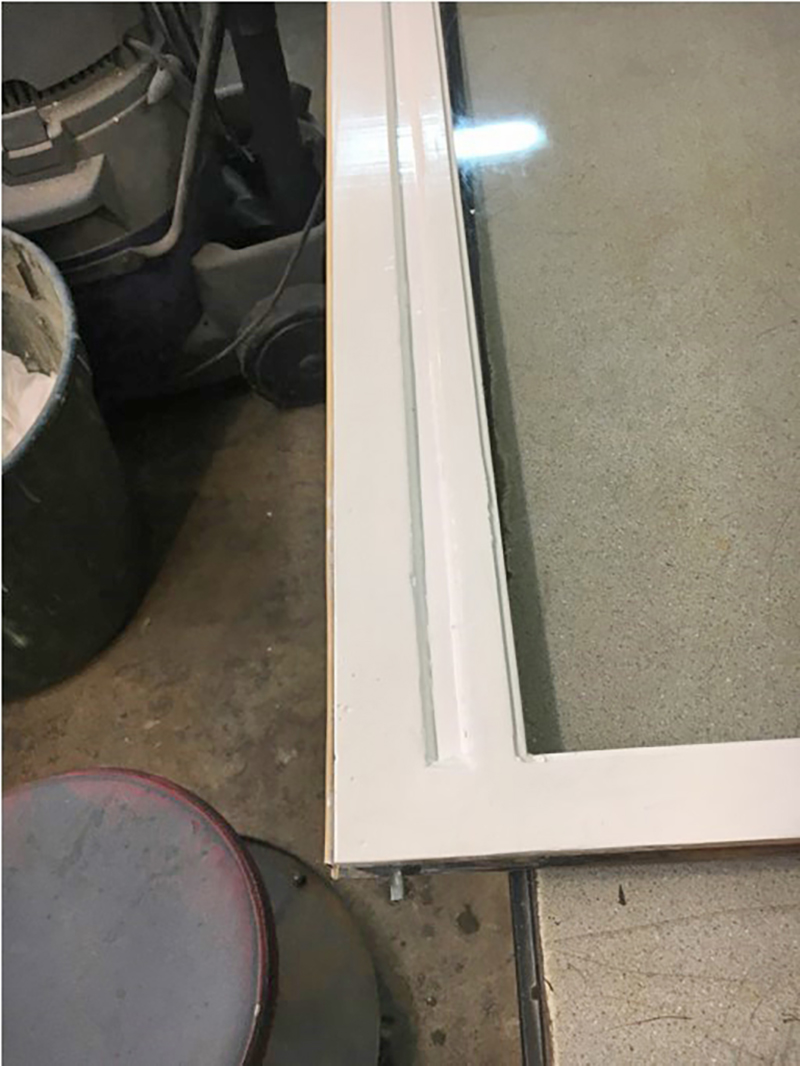
Object: white-framed window pane with frosted glass. Action: it rests sideways on a concrete floor. Context: cluttered workshop beside machinery on the left and a circular metal lid on the right.
The repaired areas were sanded, primed, and painted. The hardware was reinstalled.
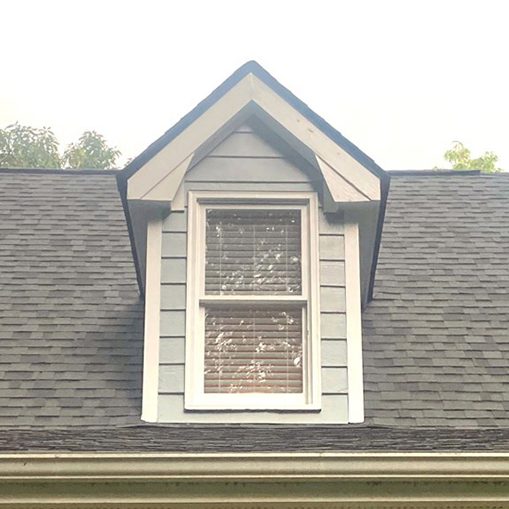
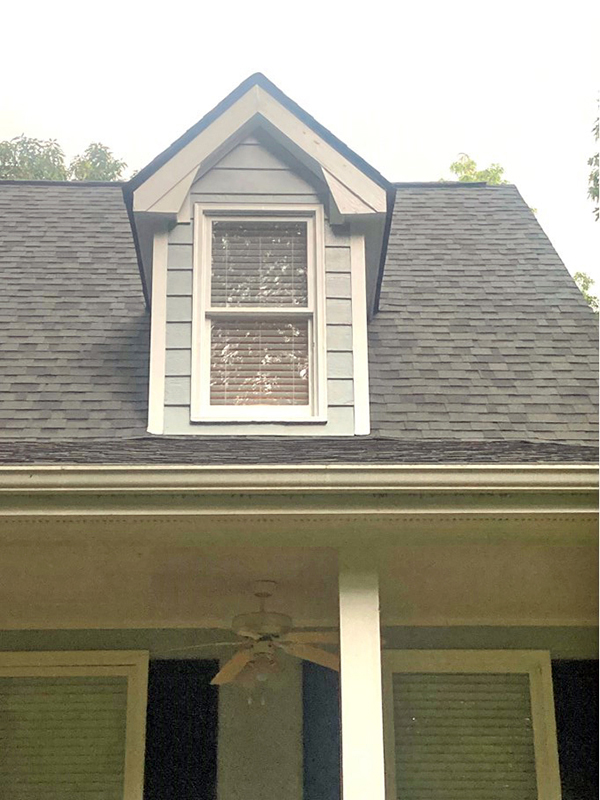
Dormer window with white trim sits on a shingled roof. A window with blinds is bordered by siding and a peaked gable. Trees peek over the roofline in the background.
Reinstalled exterior view.

Editor’s Note: When working in warm weather, you may want to use 209 Extra Slow Hardener® for filling large voids to prevent excessive exotherm.