Chris Craft Baby Runabout
Spring 2019

GET STARTED
FREE PRINT & DIGITAL EDITIONS
Spring 2019
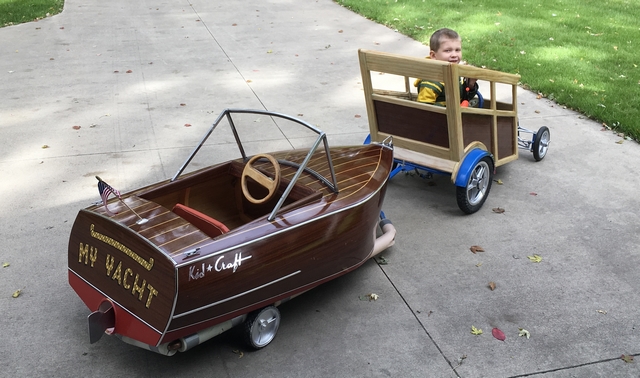
I designed this project by scaling down a Chris Craft runabout from pictures I found online.
I started with five rib frames and a center beam temporarily mounted upside-down on a workbench. I glued and stapled the ¼” x ¾” bead-and-cove pine strips to the ribs. Once all the strips were installed, I removed the staples and sanded the hull smooth for the heat-activated 2″ mahogany strips I’d apply later.
I cut out a section of the transom bottom to install the small drive unit I made from a 3″ 90° PVC plumbing elbow. Inside the elbow, I fabricated a 5-blade impeller driven by a shaft connected to a foot pedal assembly under the bow. The pedal timing gear drives a small timing gear mounted to the drive shaft. The belt is rotated 90° to allow for proper rotation of the shaft. There is about a 4:1 pedal-to-shaft ratio which seems to work.
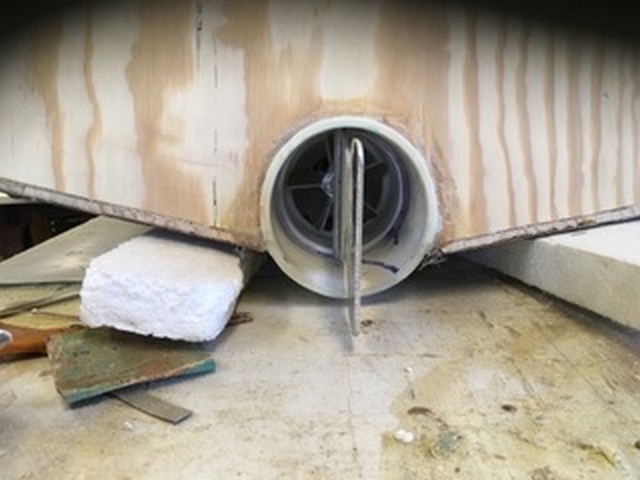
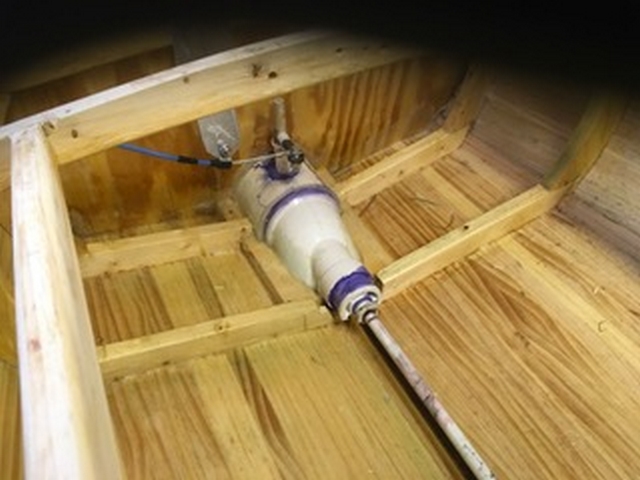
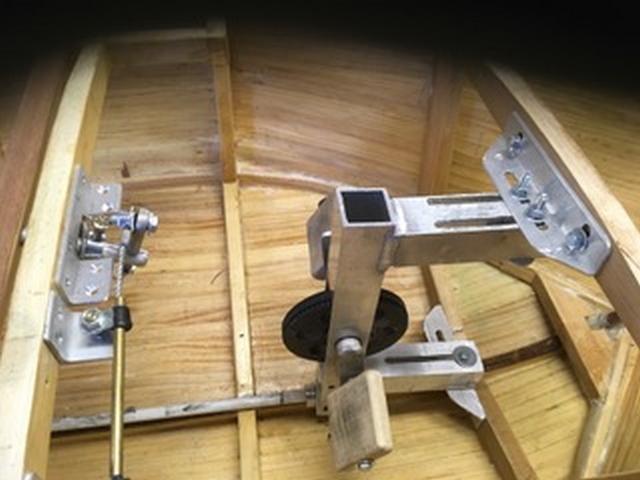
With the drive assembly finished, I went to work on the deck. I edge glued the deck strips and stapled them to the top of the ribs, taking care not to glue the deck to the ribs at this time. After the glue was dry, I removed the deck from the hull, sanded the inside of the hull and deck, and epoxied the deck for future permanent installation.
Before mating the deck and hull, I installed the steering system. I attached the steering wheel assembly to the rudder assembly at the rear of the drive assembly. I attached a cable inside a plastic tube from the lever on the wheel and connected it to a lever on the rudder.
After sanding the exterior, I applied 2″ mahogany strips with a heat iron and cut them as necessary to match the curve of the hull. With the bottom hull fully covered, I applied the deck permanently. I skinned the top of the deck with mahogany strips and applied 1/8″-wide pine strips between each strip of mahogany. I then sanded everything smooth to prepare for fiberglassing.
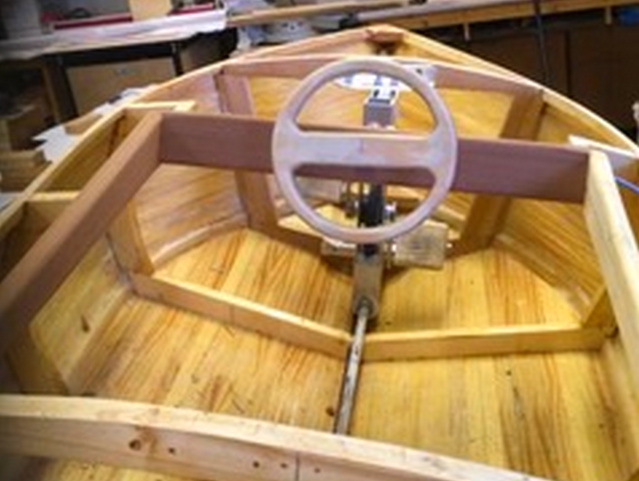
I used 4 oz. fiberglass cloth with two coats of WEST SYSTEM 105 Resin / 207 Special Clear Hardener over the entire hull and deck, followed by two coats of polyurethane varnish.
The windshield is made from ½” aluminum channel bent in a curve and welded at the corners. I cut a piece of Plexiglas® to fit it.
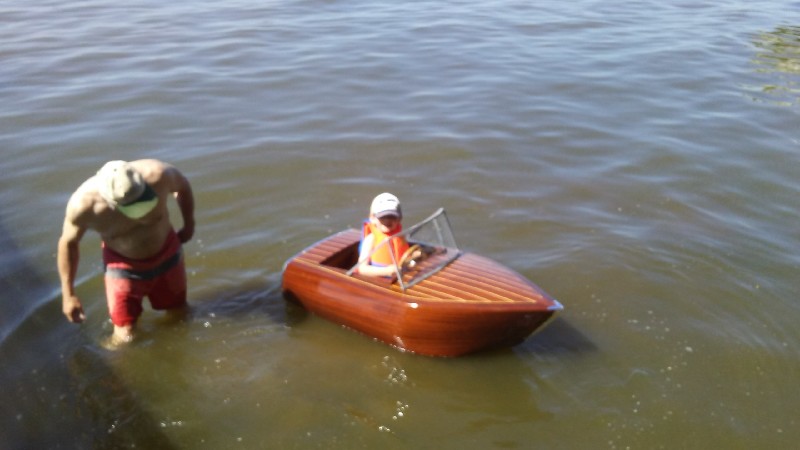
The seat slides forward and backward to accommodate my four-year-old grandson and, eventually, his one-year-old sister. By luck, the boat floats at the right level so that the drive unit is fully submerged and surprisingly functional. I have as much fun watching him in it as I had building it. Maybe this will inspire a few other grandparents.
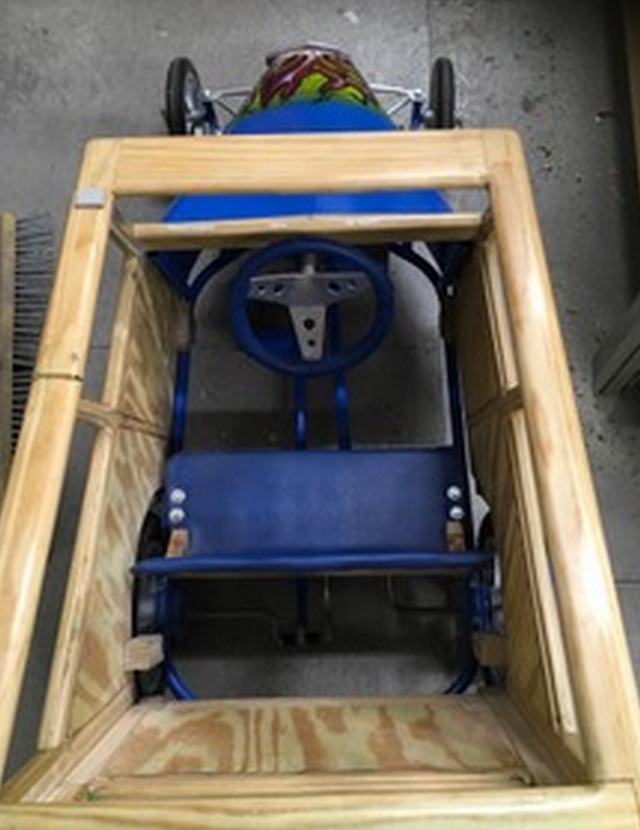
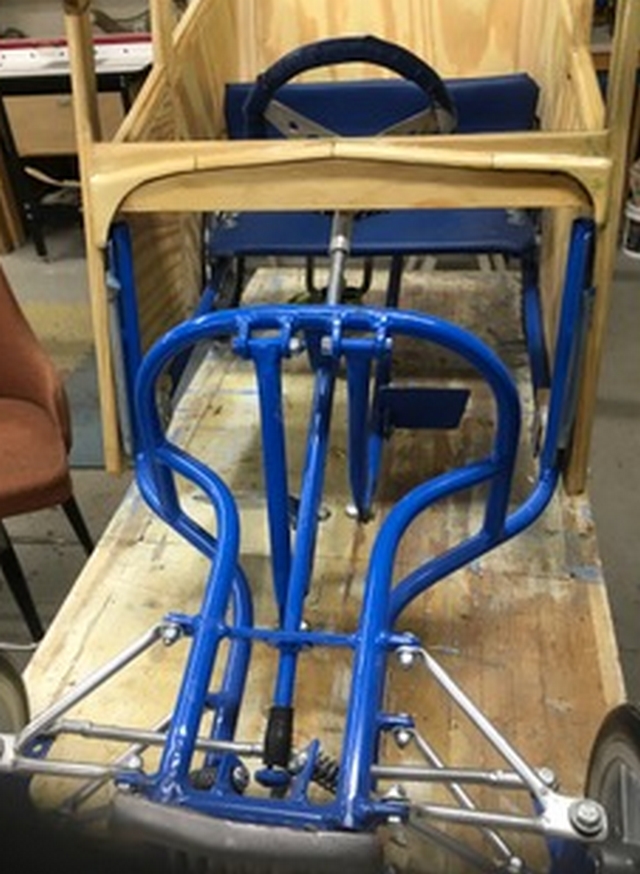
After the boat project, I thought it would be neat to build a little street rod for pulling the boat. Once again after looking online at pedal cars and chassis, I built a frame from ¾” steel tubing. As a watersports enthusiast, I thought a woody wagon would be a natural fit to pull the boat.
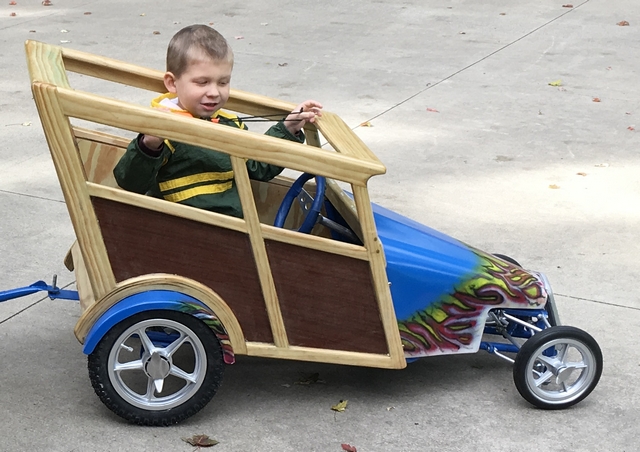
I built the body of the car from ¾”x1″ pine, dowelled and glued. After much sanding, I routed out the frame body for the ¼” plywood inserts. The plywood was covered with the same kind of 2″ mahogany heat-activated veneer as I’d used on the boat. After I’d sanded the whole body, I covered the exterior with the same 4 oz. fiberglass and 105/207 epoxy. I brushed the interior of the body with WEST SYSTEM 105 Resin / 207 Special Clear Hardener to seal the wood completely.
I formed the hood and fenders from 20-gauge sheet metal and primed and painted it. The seat is adjustable and covers the pedal rod assemblies that drive the rear axle. The independent front suspension was modeled after a full-size street rod.
My grandson really likes pedaling the car and only tows the boat on occasion because it slows him down.


 Listen Now
  Add to Playlist