

 Listen Now
 Add to Playlist



By Johannes Fast
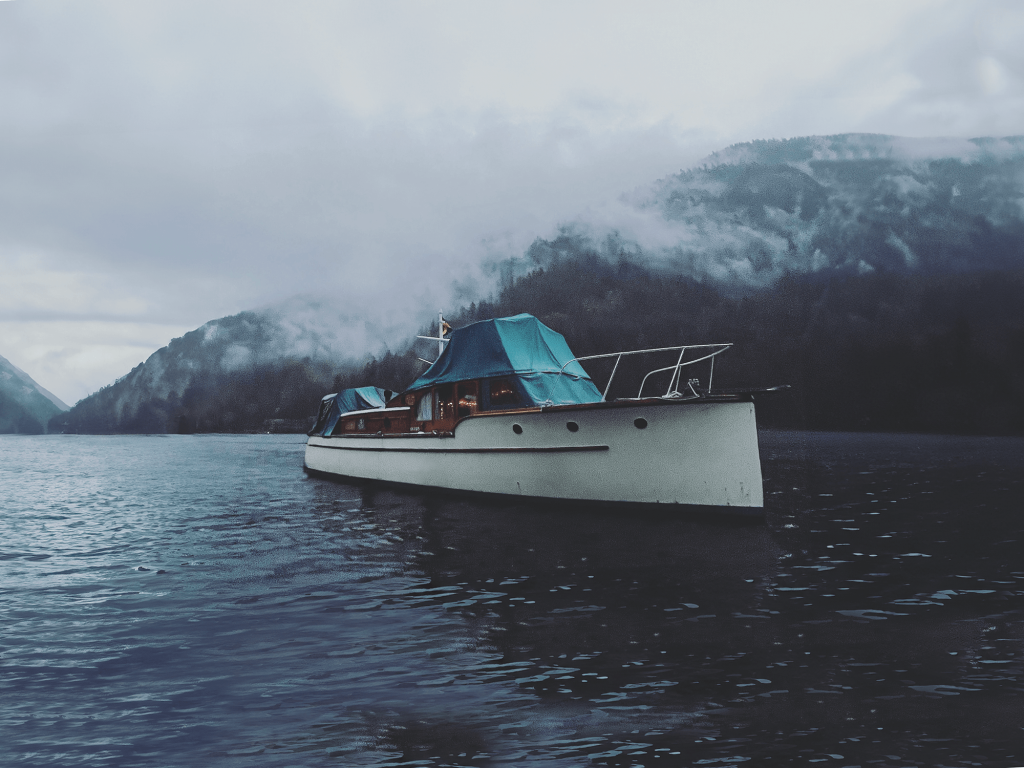
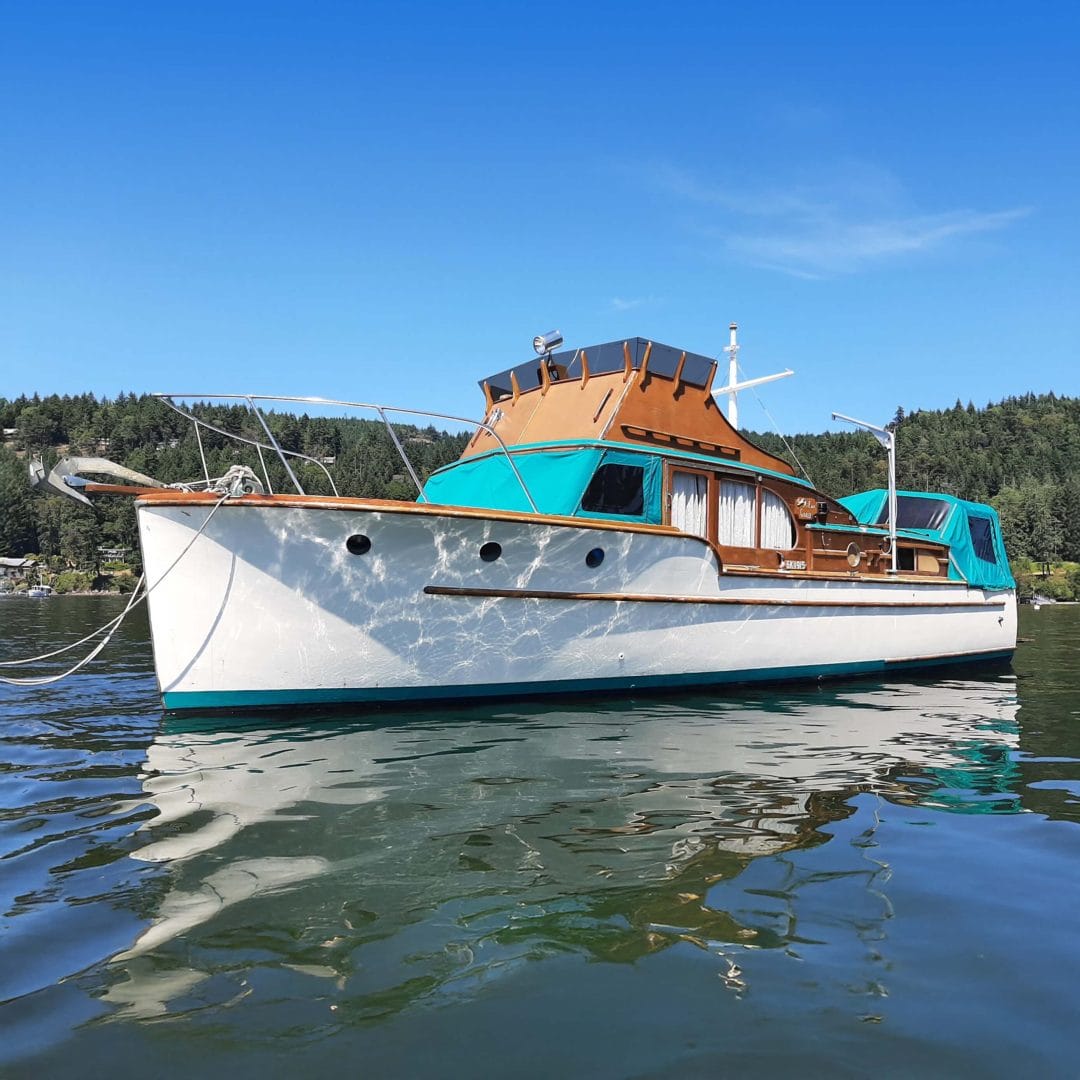
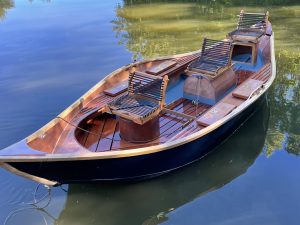
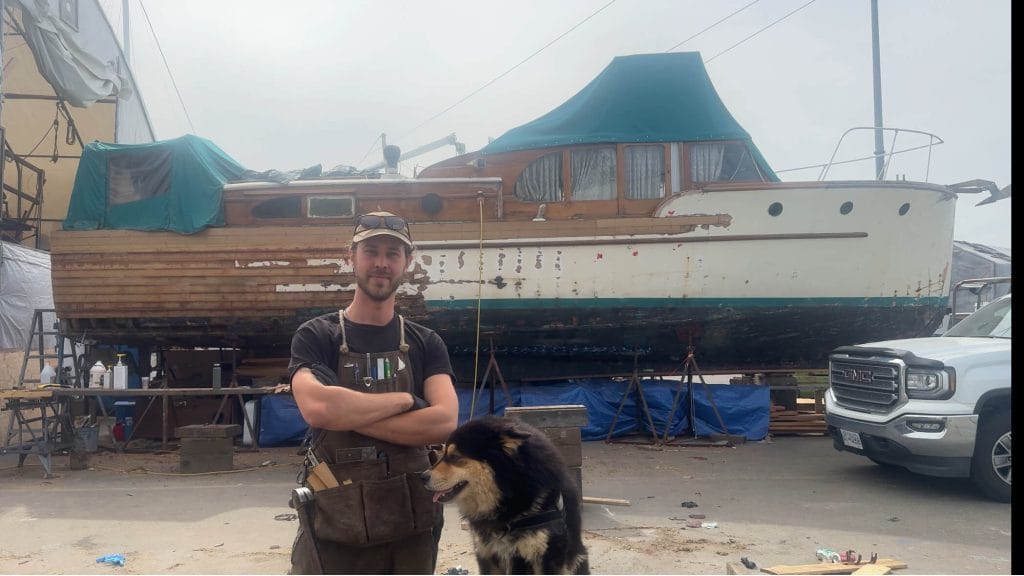
In the autumn of 2022, I got bit by the wooden boat bug and fell in love with an old classic cedar-hulled motor yacht built in the 1940s.
I grew up by the shores of an inland lake in the heart of Sweden. This lake has a peculiar past, having been formed by a meteorite impact some 370 million years ago. To this day I remember the fear I felt through my whole body as I was standing in water up to my chest, reaching my foot over the sandy edge where the lake suddenly plummeted from barely 3′ (1 M) to over 300′ (100 M) deep at a near 90-degree angle.
I thought it was an endless abyss potentially hiding all kinds of Lovecraftian horrors, or whatever my mind could conjure. In reality, the lake was mostly filled with pike, perch and the occasional eel, though they were rare by the ‘90s when I was born.
Multiple electric dams along the Dalälven river had blocked the path the Vikings once took to settle the region, largely stopping the migration of salmon and European eels from getting into the lake.
Growing up we had boats, and we’d spend the mild summers cruising between islands and sandy shorelines. We’d cook food on open fires and dig our feet into the warm sand as the sun would set behind the mountains. Those mountains formed the edge of the crater that makes up the Siljan ring.
While we didn’t have wooden boats, the tradition is still alive and well in the region, especially in my hometown of Mora. The Viking longships that once cut through the cold Scandinavian waters transformed over the centuries, echoes of those ships are still present in some ways.
The Christianization of Sweden led the Vikings to abandon the Norse religion, and with it the slim longships once used for war and exploration. The tradition of clinker built boats, transformed into the construction of narrow, oar propelled church boats. They were used to transport clergy, supplies, and parishioners across the lakes and rivers.
My first experience with wooden boats was rowing these church boats as part of the yearly graduation ceremony, though back then I paid little attention to how they were built. At the time I had no thoughts of ever owning a wooden boat myself, and especially not living on one.
Little did I know that I was opening a can of worms that I, to this day, have yet to close.
Johannes Fast
Through my work as a traditional animator, I ended up in the Pacific North West in 2018. It didn’t take me long to realize the beauty and wildness of British Columbia, but I was locked in front of a computer. I was focused on making a career in what seemed like a dying craft, as Disney® and the media world at large focused more and more on telling their stories in 3D. I was in a profession where every movement and action displayed on screen had to be drawn meticulously by hand. This inclination to work with my hands lead me to today, shaping and carving wood in an effort to save a boat that seems dead set to fall apart faster than I can fix her.
I hauled out in 2023 for what I thought was going to be two weeks of maintenance. She’d been taking on a bit more water than I was comfortable with, and I figured it was time to re-cork some of the major seams.
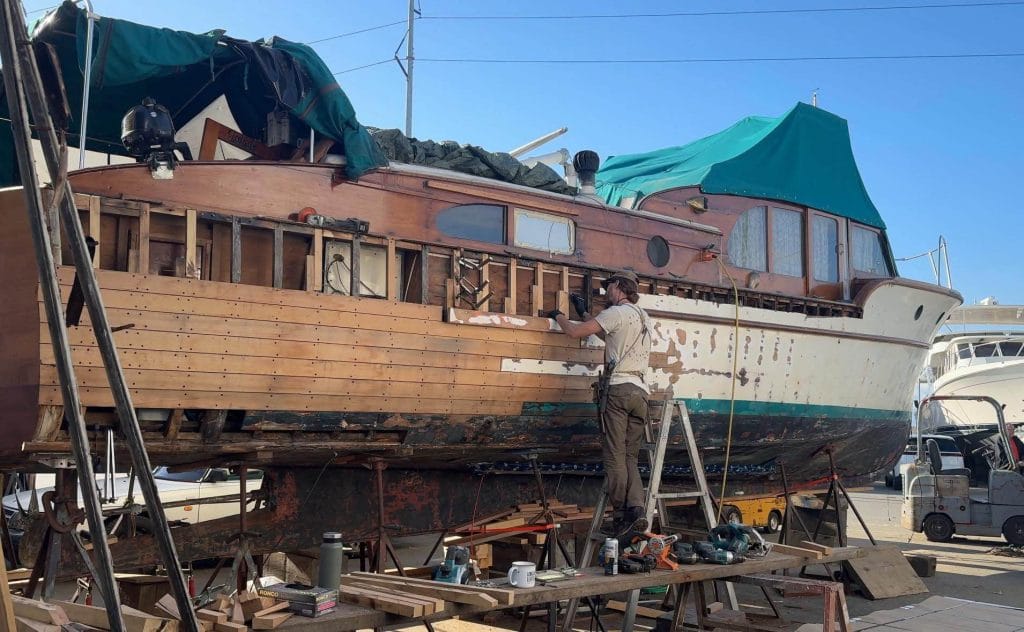
One thing led to another, and it was slowly revealed that the boat was in a lot worse shape than what the beautiful words of the survey had promised. Deceptive rot hiding in inaccessible corners, square ship nails having rusted to the thickness of sewing needles, and wood melting from a bonded electrical system had created the perfect storm of deterioration. There I was, in the middle of it all, naive and inexperienced when it came to woodworking, and especially boatbuilding.
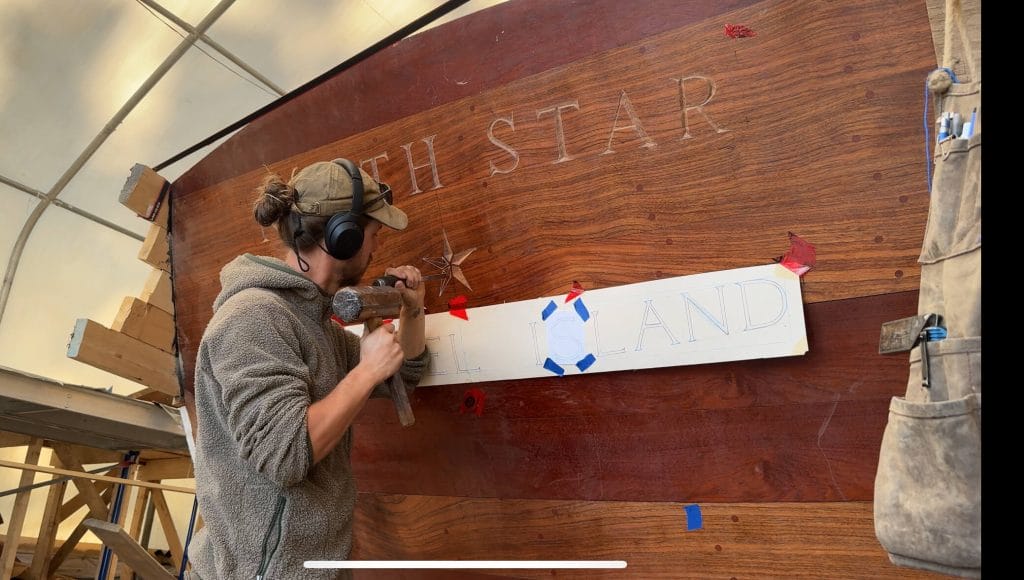
I decided that I wanted to do the work myself, and by chance I was offered a job in the boat yard to use my skills in videography, design, and animation to document and produce a video series on the restoration of a historical wooden Inuvialuit vessel, North Star of Herschel Island. This was the start of what in effect became a shipwrights apprenticeship. I spent a year documenting the work of the shipwrights, watching them with an eager eye, absorbing all the information I could to later apply it to the restoration of my own vessel. In the second year, I took a hands-on role in bringing this boat back from the brink.
This was the start of what in effect became a shipwrights apprenticeship.
Johannes Fast
I started working on the stern of my own boat. That’s where the most obvious deterioration was found. The ringtimber had started to rot away over the decades, and as I peeled away the mahogany planking of the transom, it was revealed that what once was wood was now mulch. The butt ends of the red cedar planking below the waterline were fastened to nothing. It had all rotted away, and in such a way that it was completely invisible from the inside of the boat, fooling the surveyor, the previous owner, and me.
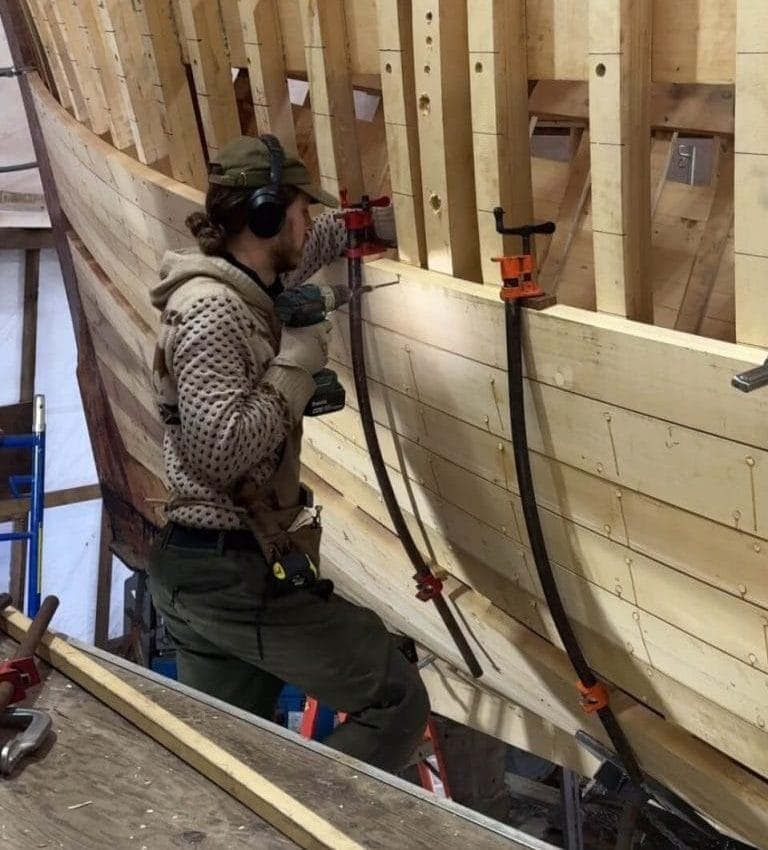
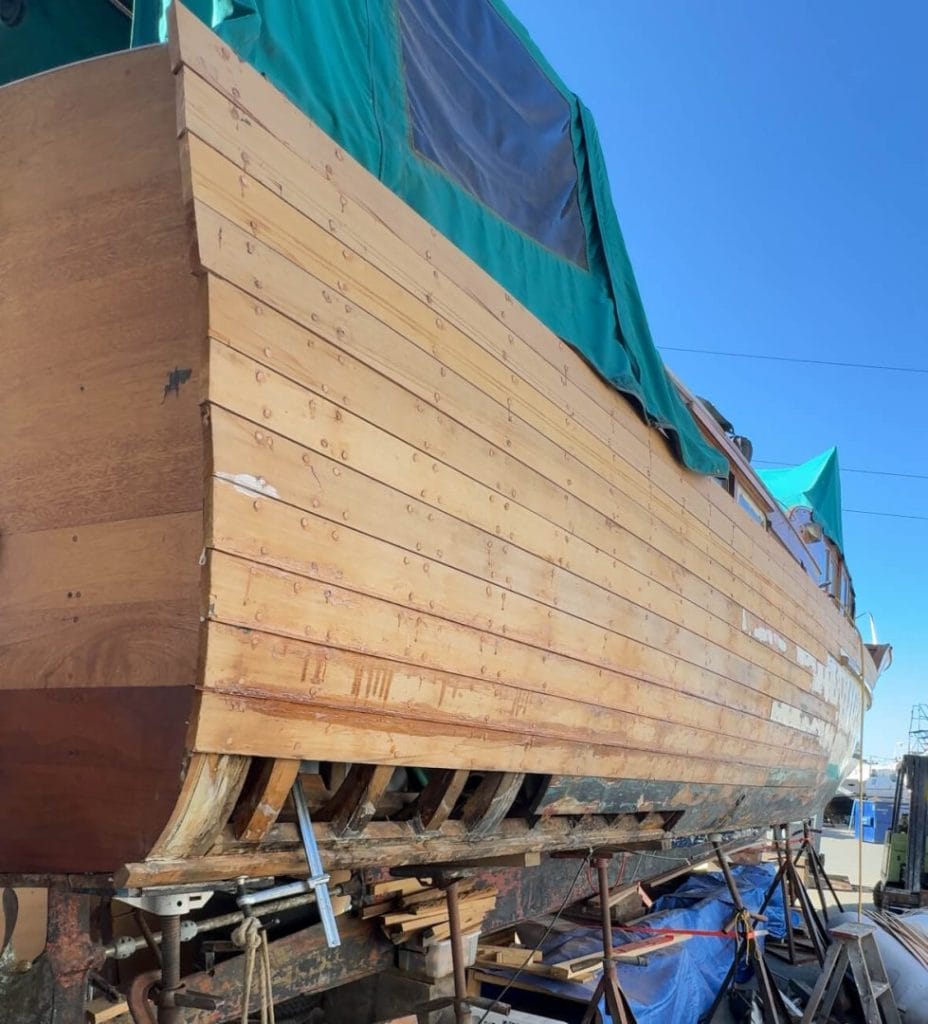
I took it all apart: I notched out a piece of the keelson around the rudder post where electrolysis had wreaked havoc, and I started to make new pieces out of fresh wood. New transom frames cut out of air-dried black locust were installed in the stern. A ringtimber cut out of oak and locust and a new piece of the keel was laminated into place using generous amounts of the WEST SYSTEM® 105 System. Once I had (with much effort) replaced the structural timbers of the transom I could start getting the new planking back in place.
The stern was built with a somewhat thin laminated mahogany planking on marine plywood. To this day I don’t know if it was original. I took a pattern of the transom, transcribed it onto a new piece of plywood, cut it out, and fit it in place. The planking stock I’d cut from an old mahogany door, supposedly having once been the entrance of a Red Robin (somewhat telling by the red paint it had been covered in).
Piece by piece I worked my way from the bottom to the top carefully laminating each plank with the WEST SYSTEM 105 System and fastening it all with silicone bronze screws.
It took me a while, months really, to get it all back together again. But by Christmas 2024, I had managed to get the transom back on the boat, and I was very happy with my work. Now we might have all hoped that this would’ve been the happy, albeit belated, end to what was supposed to be merely a two-week haul-out, but the sweltering summer heat revealed that the boat’s true condition was far worse than it had seemed. While I was putting planks back into the stern, other planks were popping out of the bottom of the hull as the old iron nails revealed their deteriorated condition.
I’m now in my third year living in the boatyard onboard my old beloved cruiser, working to one day bring her back to the waters where she belongs. You’re welcome to follow the journey of her restoration on my YouTube channel, @JohannesFast.
From a dusty boatyard, Johannes Fast.
From a dusty boatyard, johannes fast.
Johannes fast