Trades – A Drift Boat Restoration
November 13,
2026

GET STARTED
FREE PRINT & DIGITAL EDITIONS
November 13,
2026
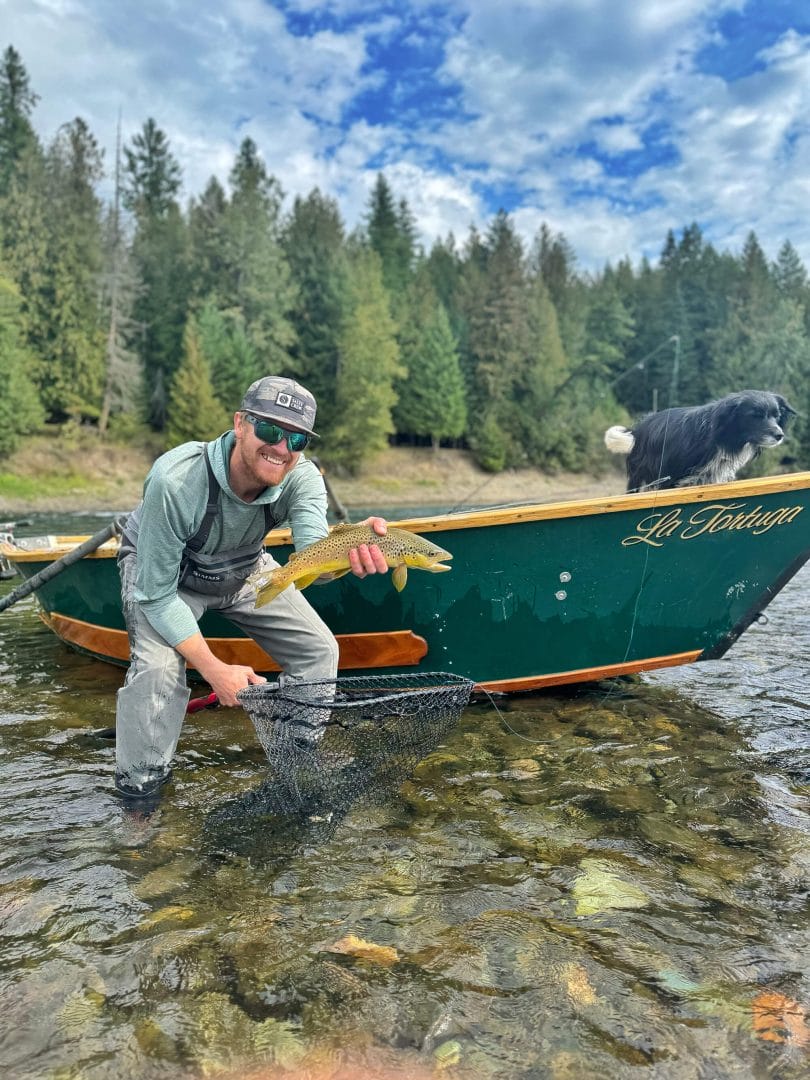
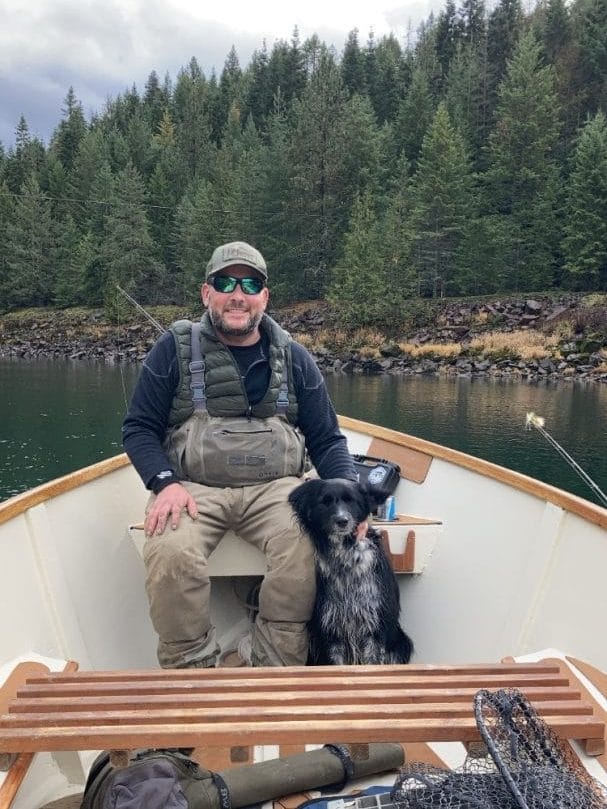
I met Brian through a program called May Fly Project, where we took foster kids and kids in the system fly fishing. The first thing I noticed about him was that he was impossible to miss. He’s about 6’7″ (200 cm), and while everyone else was struggling to help their kids hook fish, Brian was the guy consistently putting them on fish all day long.
At one point I finally walked over and asked him what he was doing differently. He showed me the fly pattern he was using, cracked a joke, and we hit it off immediately. At the time, I didn’t realize I was talking to a guy who had a reputation among local anglers for catching giant rainbow trout in places and ways most people wouldn’t believe.
Brian guarded his fishing spots like classified information, and honestly, I respected that.
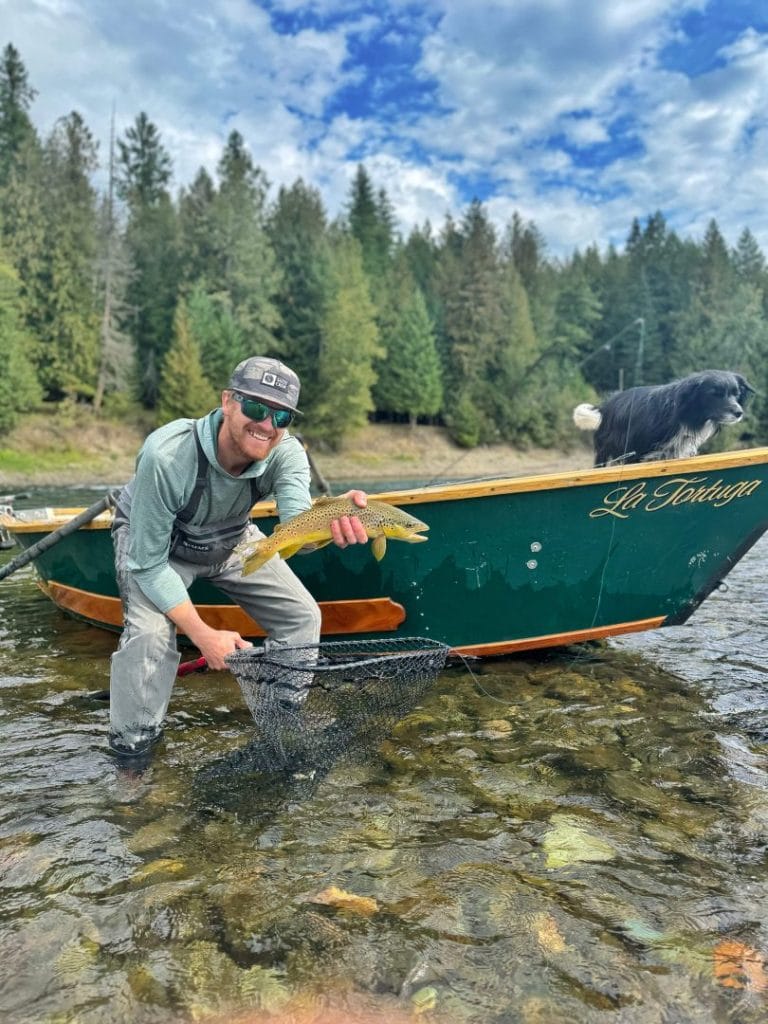
Over time we became friends and started fishing together regularly. Brian rowed an old green drift boat that had clearly lived a hard life. It had scars everywhere—worn paint, old repairs, cracked wood, and the kind of personality only a heavily used river boat earns after years on the water.
The boat itself was a handmade wooden drift boat from somewhere around the 1980s. Brian bought it from a guy named Jimmy off Craigslist, who had gotten it from the original owner—a California river guide who reportedly built and fished the boat for years on the Trinity River. It was not a showpiece. It was a real working river boat with a real history behind it.
At some point I noticed water collecting in the bottom. “It leaks a little,” Brian told me casually.
I told him to bring it by my house, and I’d patch it up for him. No problem. What’s the worst that could happen…? (That’s called foreshadowing.)
Having spent years in wooden boat restoration working on everything from classics to high-end custom boats, I’d seen plenty of rot before—but this one was in a league of its own.
Once I started opening the boat up, things got ugly fast. Somewhere along the way, a false floor had been added over the original ribs to create a flat interior floor. Unfortunately, the design trapped water in pockets underneath instead of letting it drain properly. Years of moisture had rotted nearly everything from the waterline down.
The deeper I cut into it, the worse it got.
Fiberglass peeled off in sheets. Structural members crumbled apart in my hands. Entire sections of wood had turned black and soft. At one point I remember thinking that this thing shouldn’t even be repaired anymore. It should probably just be burned. And 99 out of 100 times it probably would have been.
The truth was, I probably should have called Brian and told him the boat was beyond saving. Structurally, it was worse than almost anything I’d worked on before. But I knew how much he loved that boat.
It wasn’t just a drift boat to him. It carried years of memories, rivers, fish stories, and hard-earned experiences. I knew how proud he was of it, and I just couldn’t bring myself to tell him it was finished. I didn’t have the heart… and I really wanted him to owe me. I needed those darn fishing spots, remember!
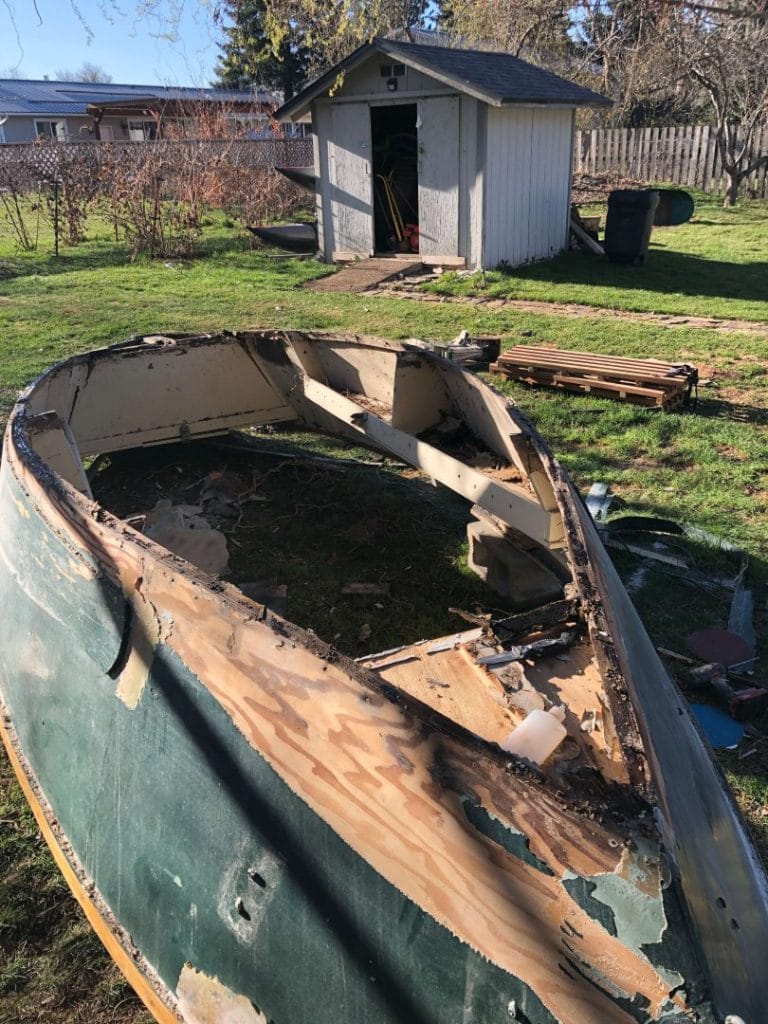
So instead of calling him and telling him it was hopeless, I just kept cutting and tearing. What started as a simple leak repair slowly became a complete structural rebuild.
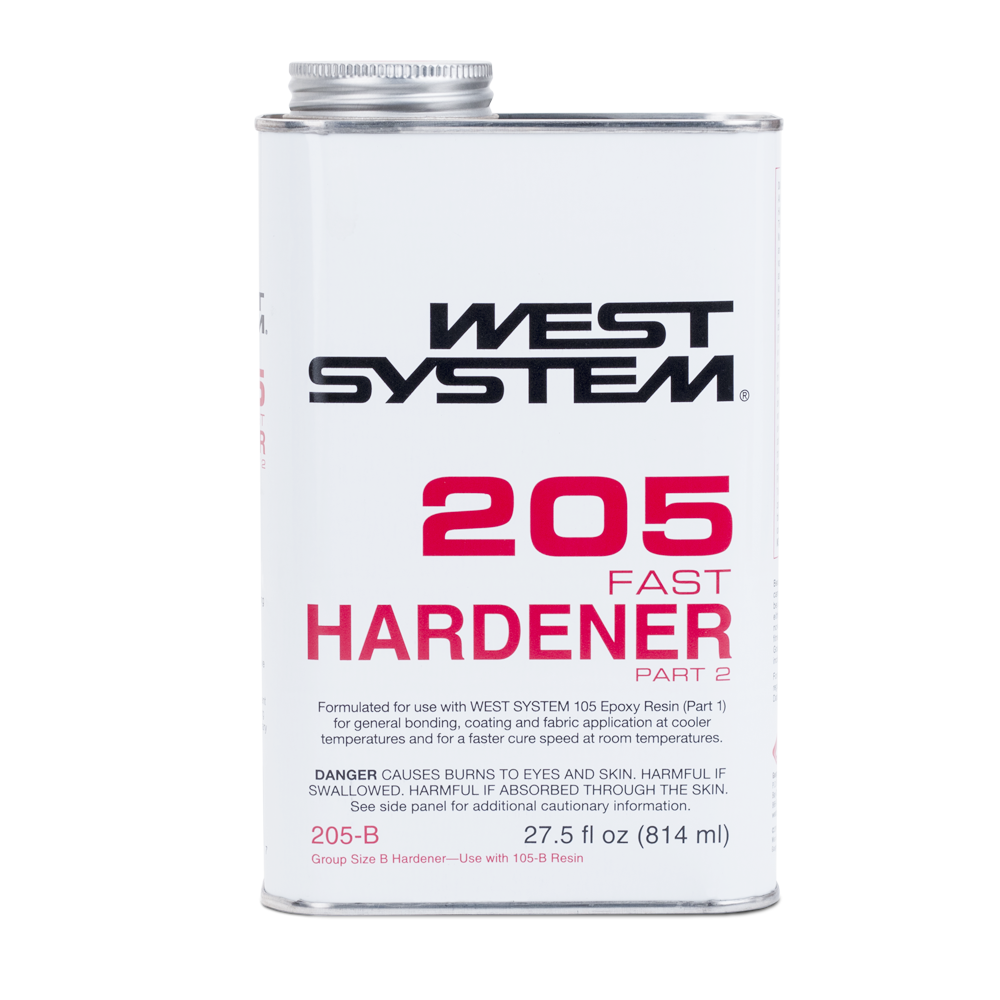
I replaced the entire bottom using ¼” (6 mm) marine plywood fully encapsulated in WEST SYSTEM® 105 Epoxy Resin® with 205 Fast Hardener®. Before installation, every panel was sealed thoroughly to prevent future moisture intrusion.
Most of the lower structural framing needed repair or replacement. I cut back damaged sections of the frames and sistered in new mahogany pieces to restore strength throughout the hull. The rebuild quickly became far larger than anything I had attempted before, and honestly, there were stretches where she scared the hell out of me.
What started as a simple leak repair slowly became a complete structural rebuild.
Phillip Biggerstaff
I would work on it for a while, then stop for days, weeks, maybe a month. I was just staring at it, trying to figure out the next move. Praying the restoration fairy would come in the night and put some hours on her for me.
At one point I finally called my friend Josh over, who is a far more experienced boatbuilder than I am. The keel-to-transom joint required complex compound angles that I simply could not get right on my own. Having another set of experienced hands there helped push the project forward again.
Once the new bottom was finally fitted and screwed into place, I finally felt my first real moment of confidence. Until then, the whole thing felt like controlled chaos. But suddenly the hull was solid again.
That was the moment I realized: “This might actually work.”
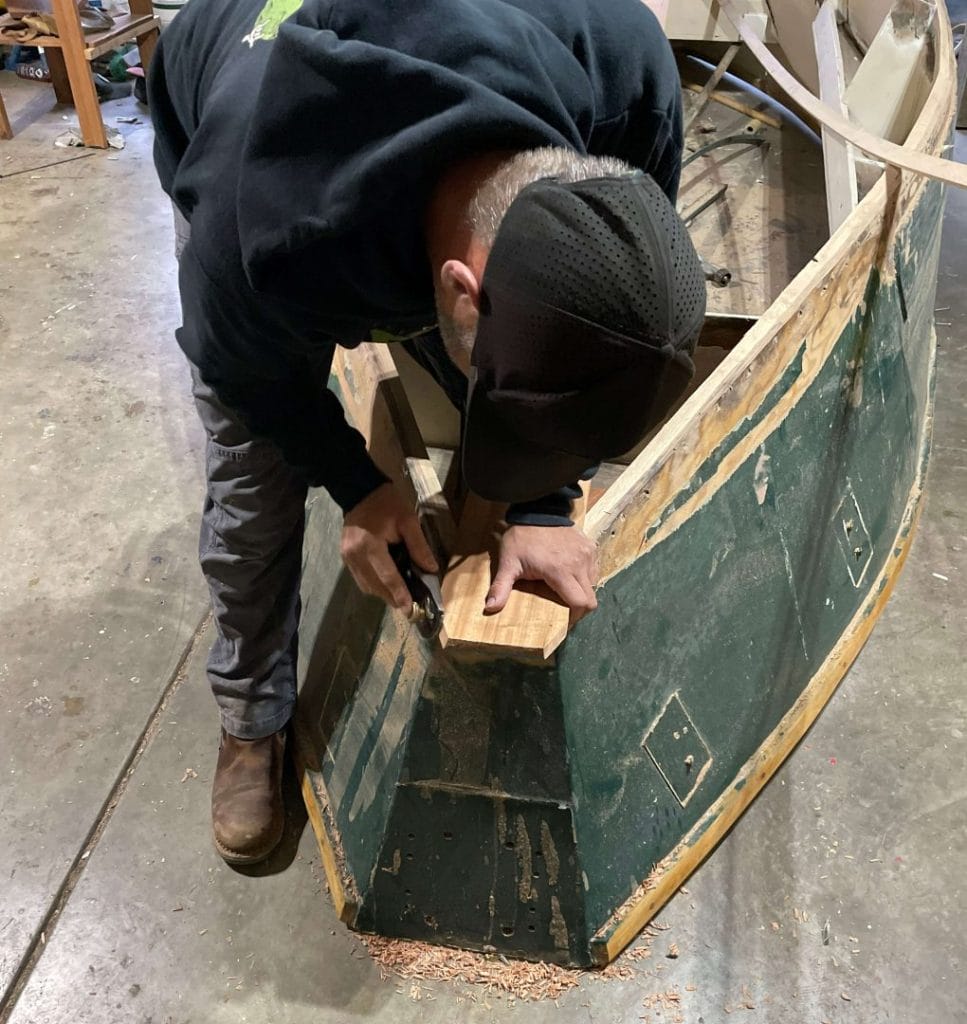
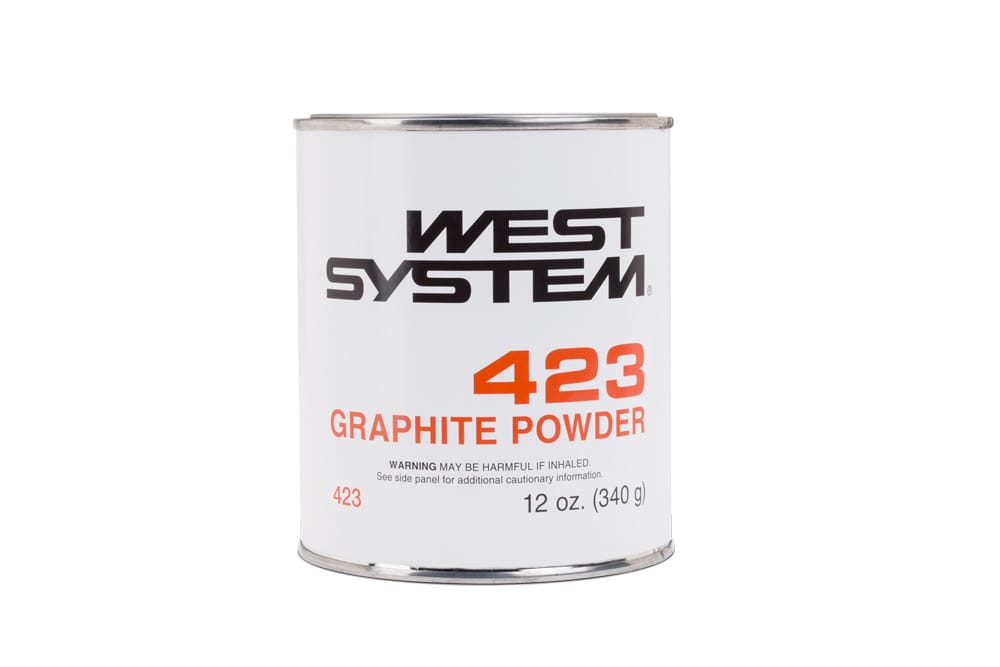
The exterior bottom received a layer of fiberglass reinforcement followed by carbon fiber reinforcement over the keel area. All composite work was laid up by hand. I used WEST SYSTEM® 403 Microfibers for structural thickening and WEST SYSTEM® 423 Graphite Powder in the final epoxy coating on the bottom, partly for abrasion resistance, but mostly because I wanted the boat to slide better over rocks in skinny water.
Instead of hiding all the composite work, I decided to leave sections of exposed carbon fiber visible along the keel strip, stem, and transom. Against the jade green Interlux® paint, the exposed carbon details gave the boat a modern look while still respecting the original lines of the drift boat.
The entire hull was primed with Awlgrip® primer before final paint. Inside, I added SeaDek® flooring for comfort and durability.
The project took months. Throughout most of it, I avoided sending Brian progress photos. Part of me wanted him to see the finished boat all at once. I don’t think he had any idea how serious the rebuild had actually become.
When I finally delivered it, he tried hard not to get emotional.
But he did.
Seeing that reaction made every miserable hour worth it.
Not long afterward, we were back on the water chasing giant trout again. On one trip I hooked a rainbow so large I honestly thought it might push twenty pounds before losing it. The next day we landed several more fish in the 9–12 pound range on fly rods. That boat was back where it belonged.
Looking back now, I never did the project for money. Honestly, there’s no way I could have charged enough for the amount of work involved anyway. I did it because I had a skill that Brian didn’t, and Brian had knowledge and experiences I never would have found on my own.
That’s why they call them “Trades”.


 Listen Now
 Add to Playlist