Building the Dream
Spring 2014

GET STARTED
FREE PRINT & DIGITAL EDITIONS
Spring 2014
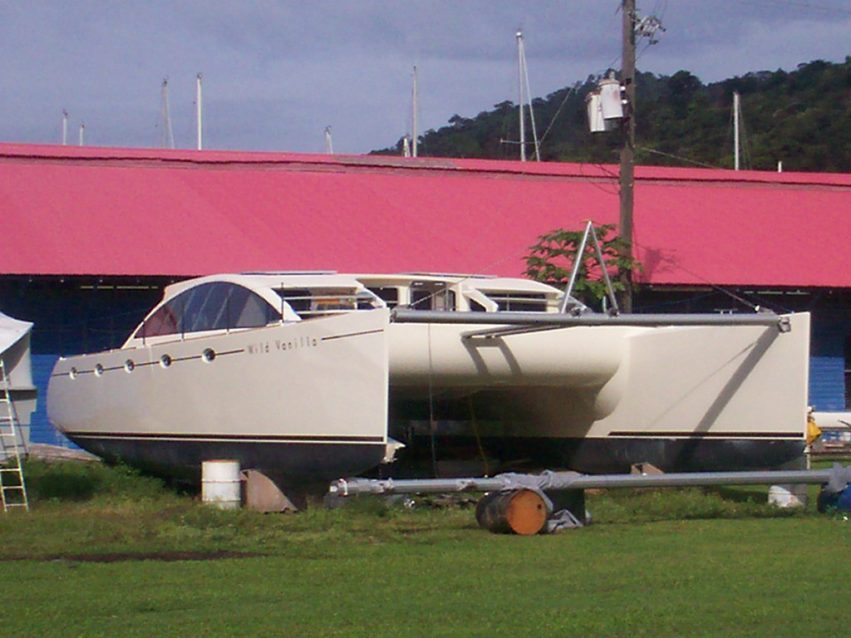
We started building our dream boat, a DH550 55′ catamaran we christened Wild Vanilla. Our catamaran was built on a piece of land just behind Budget Marine in Trinidad, during a break in our long-term family cruise. Before we began, we had sold our boat building company, Harvey yachts in Cape Town South Africa, and set off on our 38-foot cruising cat. Onboard were our nine-month-old son and our cat, Velcro.
We sailed from Cape Town to St Helena Island, Ascension Island, and the Azores then into the Mediterranean visiting Portugal, Spain, Italy and Greece before wintering in Turkey. Here was born the dream of a bigger boat that could carry us faster across the oceans. I sketched the boat I wanted to build. I did a lot of thinking about materials before I contacted Dudley Dix, an old friend who had developed the radius chine plywood construction method. He offered to do a collaborative design with me and we set out to do all the planning.
In the meantime, we sailed back across the Mediterranean and headed for the Caribbean. When we put our current boat on the market there was a rush of interest, so we headed south to Trinidad to haul and clean up the boat. It was sold within two weeks. Here we were with a design and all our earthly belongings. Laura was pregnant so we asked if we could stay to build our next boat. We looked around at what could be done in Trinidad. We had great support from the yard, Powerboats, and especially Donald Stolmeyer the manager there. We were introduced to Risa Hall who handled our account at Budget Marine. Without her and the Budget Marine staff, it would have been very difficult to build there. We managed to find a piece of land just behind Budget Marine where we had a shed and container storage setup for the build.
We chose the best materials available for this type of build: WEST SYSTEM 105 Epoxy Resin, 209 Extra Slow Hardener, and Brunzeel plywood imported for us by Budget Marine. Locally, we got cedar for stringers and mahogany for structural beams. With The Gougeon Brothers on Boat Construction book firmly in hand, we set about building our 55-foot cat Wild Vanilla. We used WEST SYSTEM products exclusively and it was a pleasure to work with. We believe this will help our resale price in the future. The boat design can be viewed at www.dixdesign.com/55cat.htm. We ordered all of our WEST SYSTEM Epoxy, materials, and equipment via Budget Marine and Powerboats store.
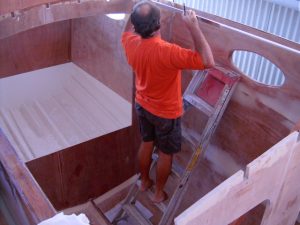
I started the project on my own. Soon the large plywood sheets I was scarfing together were too large for me to handle, so I employed some local young guys that I trained in the use of epoxy/wood. I soon had six people working with me and I had to train them in all aspects of boat building.
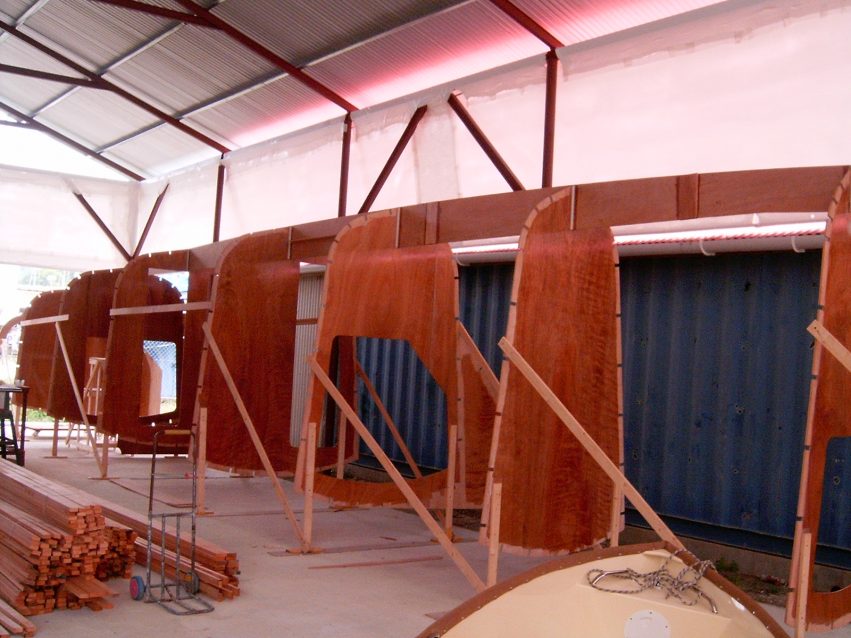
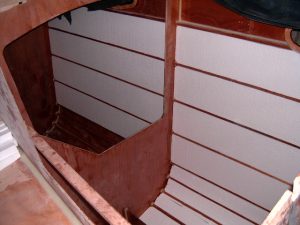
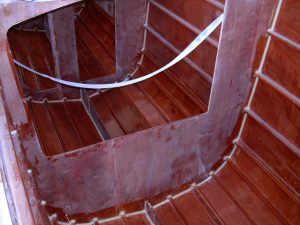
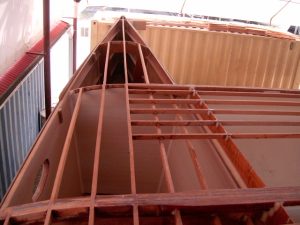
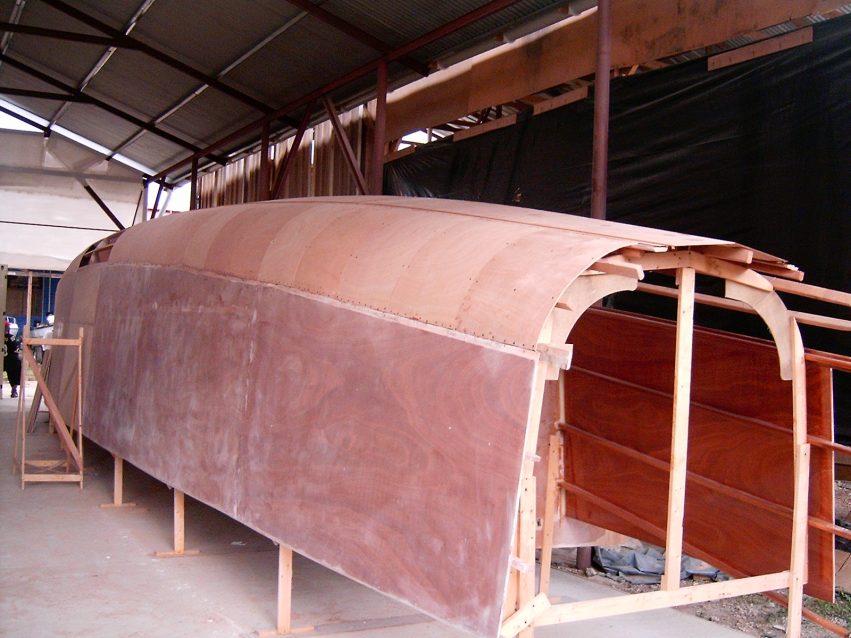
We first made all the plywood bulkheads for the hulls, then put them up on “feet “ while I lined them up to accept the long cedar stringers we had made. After this, we started adding the scarfed hull panels to the frames. All panels were pre-coated with WEST SYSTEM Epoxy then glued and screwed to the frames. All fasteners were removed once the epoxy had cured.
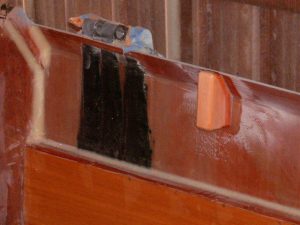
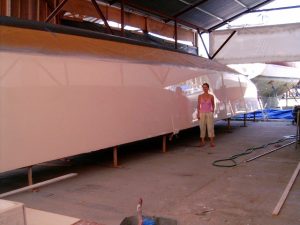
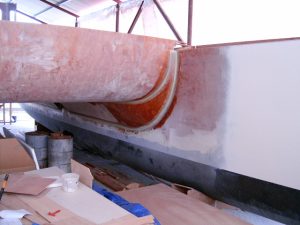
I used the radius chine construction method to make the hull radiuses. The final hull panels contained carbon fiber chainplates for the rigging. We then started the fairing process, all the while adding coats of epoxy. We ended up with six solid coats on the hulls before the painting with epoxy high-build primers and finishing in Awl-Grip® topcoats.



 Listen Now
  Add to Playlist